What is Duchenne Muscular Dystrophy?:
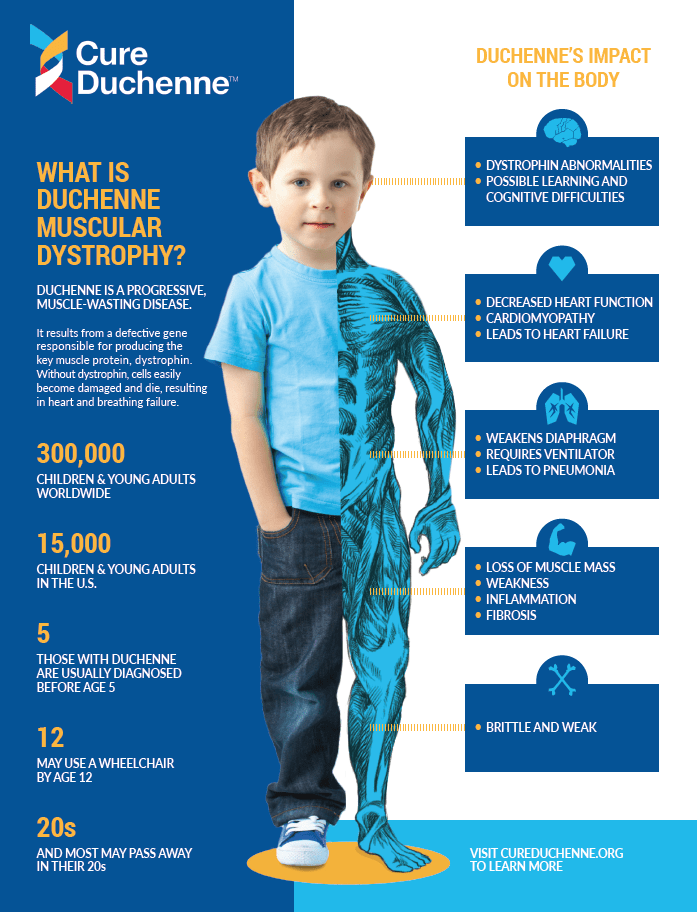
DMD is a rare muscular disease in males typically discovered between the ages of three and six years of age. The disease is characterized by progressive muscle weakness, requiring most patients to be wheelchair-bound by their teenage years. Breathing difficulties and heart disease generally develop as life-threatening complications. DMD is the result of mutations to the DMD gene bound to the X chromosome. When this gene is unable to function properly, dystrophin is unable to be produced. Since dystrophin is responsible for maintaining muscular function, without it, muscles begin to fail and degrade.
Symptoms:
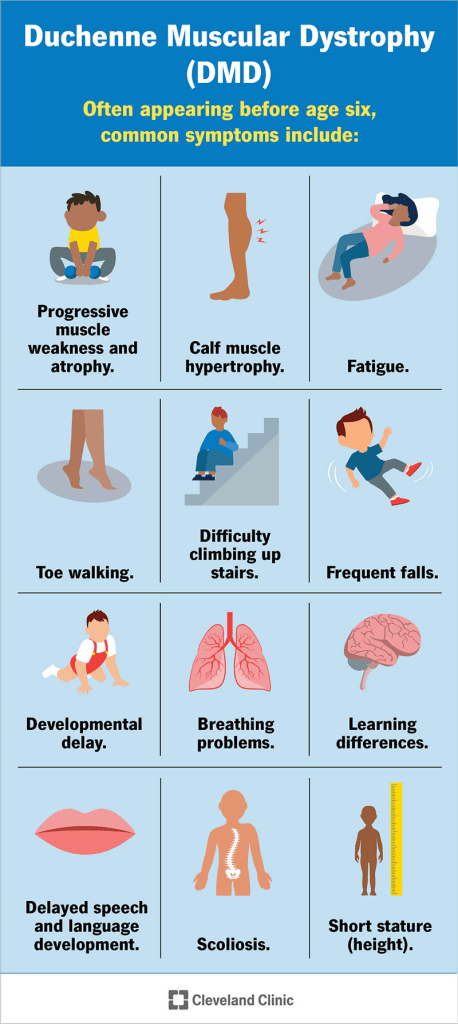
DMD is typically identified in childhood, and even though symptoms vary from person to person, generally weakness first develops in the muscles near the upper legs, pelvis, upper arms, and shoulders. Children with DMD tend to have trouble reaching developmental milestones like sitting or standing without assistance, climbing stairs, rising from a sitting position, and they tend to repeatedly fall. DMD causes movements of children to be awkward, partially as a result of their enlarged calf muscles. Children with DMD may have some developmental improvement between the ages of three and five, however this is most likely the result of normal development, not the disease resolving itself.
As the disease progresses, other abnormalities such as scoliosis or lordosis, wasting of the thigh and pectoral muscles, and fixation of certain joints contractures can develop. If a child goes without physical therapy, they may need leg braces by eight to nine years of age to them in their walking. Around age 10 to 12, most individuals with DMD will be wheelchair-bound. Additionally, those with DMD have an increased bone density, causing them to be more prone to fractures in the hips and spine. Individuals with DMD may also be predisposed to having learning disabilities.
By the end of the teenage years, life-threatening complications like weakness, and deterioration of the heart muscle, which includes the impairment of the heart to pump blood, irregular heartbeats, and even heart failure can develop. Additionally, weakness and deterioration of muscles in the rib cage can develop, resulting in an increased susceptibility to respiratory infections, difficulty coughing, and respiratory failure. Since the gastrointestinal tract involves the muscles, it can result in an extremely slow passage of food through the digestive tract, as a result of the uncoordinated muscles. This can result in constipation and diarrhea. One third of patients with DMD have some form of cognitive impairment, including learning disabilities, attention deficits and autistic spectrum disorders.
Causes:

The dystrophin protein, affected by the mutation to the DMD gene, is found inside the membrane of muscle fibers. When the production of dystrophin is affected, muscle fibers begin to degenerate. A small number of muscle fibers can be naturally regenerated by the body, but over time, more and more fiber is lost, leading to the diagnosis of DMD. Additionally, DMD is an X-linked recessive disease, meaning the disease is most prevalent among males. If a female had the mutated DMD gene on one of their X chromosomes, they would be a carrier for the disease and be able to pass it onto their sons. Considering females have two X chromosomes, they would need two mutated X chromosomes to inherit the disease, but since males only have one X chromosome, they only need the minimal presence of one mutated X chromosome to develop the disease. However, if a female has one mutated X chromosome, she will be a carrier. With each pregnancy a female carrier has, she has a 25% chance to have a carrier daughter, a 25% to have a non-carrier daughter, a 25% chance to have a son with DMD, and a 25% chance to have a son without DMD.
If a male with DMD reaches sexual maturity and has children, he will pass on his mutated DMD gene on his X chromosome to all his daughters, making them carriers. He will be unable to pass on the disease to his sons, as he will pass on his Y chromosome to them instead. Female carriers for DMD may experience a few, less intense symptoms of DMD, including weakness of the arms, legs, and back. They are also predisposed to developing heart abnormalities, resulting in shortness of breath and inability to effectively exercise. These symptoms, especially the heart abnormalities, can become life-threatening if left untreated.
Though most males inherit the mutated DMD gene from their mothers, it is also possible for boys to have a spontaneous mutation of their genes, resulting in the development of DMD. The cause of this remains unknown, and currently appears to be purely random.
Diagnosis:
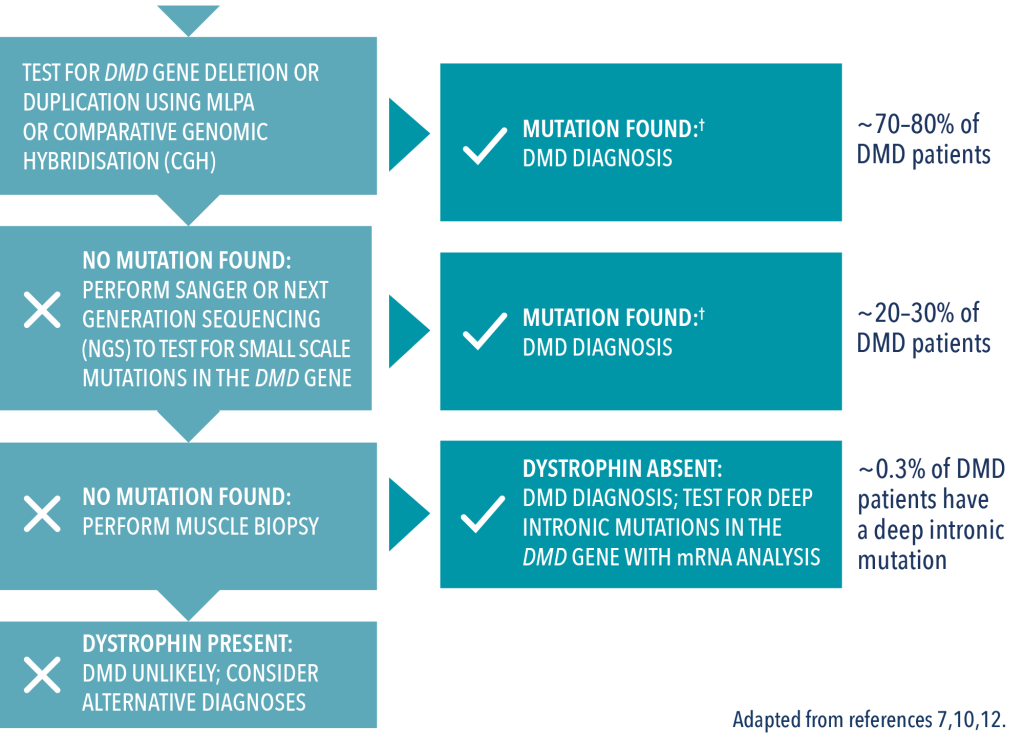
DMD can be diagnosed via clinical evaluation, patients genetic history, and molecular genetic tests, which examine the DNA to see if there are any disease-causing mutations to the patient’s DMD gene. If these tests prove themselves to be inconclusive a biopsy of the affected muscle tissue will be taken in for microscopic examination, which could reveal any abnormalities in the muscle fibers. Additionally, blood tests can be used to evaluate the levels of certain proteins in the muscles. These blood tests can help to reveal elevated amounts of creatine kinase, which is a common enzyme present when there is a high level of muscle tissue damage. If a high level of creatine kinase is detected, it will confirm the severity of the patient’s muscle damage, but it is not necessarily confirmation of the patient having DMD.
Specialized tests may need to be performed in some cases on the muscle biopsy samples to determine the presence of specific proteins. Techniques including immunostaining, immunofluorescence or Western blot can be used. These tests include the use of certain antibodies reacting to proteins like dystrophin. These biopsy tissue samples are exposed to these antibodies, and the results determine if a particular muscle protein is present and in what quantity or what size they are present.
Treatment:

There is currently no cure for DMD, so any treatment given to a patient with DMD is meant to ease the symptoms of the disease. These treatments include physical therapy and exercises designed to help build muscle strength and prevent contractures. Surgery may be helpful in some cases if their contractures or scoliosis become advanced. Additionally, braces could be used to prevent the development of said contractures. The use of mechanical aids such as canes, braces, and wheelchairs may become necessary to those with DMD to help them in walking, as their disease progresses. Furthermore, corticosteroids can be used to treat individuals with DMD, as they help slow the progression of muscle weakness extend walking ability by 2-3 years. The two most common corticosteroid drugs are prednisone and deflazacort. Deflazacort, however, is not available in the United States. In 2023, Agamree, a corticosteroid, was FDA approved to treat those with DMD aged two years and up.
Children with DMD should be monitored for potential heart irregularities that might develop as a complication with the disease. Some people may experience respiratory distress, causing them to require a ventilator to help them breathe. Additionally, genetic counseling is common for affected individuals as well as their families, aside from this, any other treatment is simply symptomatic and/or supportive.
How You Can Make an Impact:
Without proper research, funding, and support for continued studies and clinical trials to determine possible cures or legitimate medicines for the disease, many more boys will go on to develop Duchenne Muscular Dystrophy. If you can, please donate here! If you are unable to donate, consider volunteering your time by raising awareness for this rare disease. If you’re interested in learning more about DMD, donation opportunities, or the progress being made on potential treatments, visit the Muscular Dystrophy Association! The Muscular Dystrophy Association strives to “[ensure] that people living with neuromuscular disease[s] have access to exceptional care from day one of their diagnosis onward, advocating for inclusion, autonomy, and supporting our community through comprehensive educational resources.”
Let’s keep spreading awareness – Lily
References:
Acsadi, G. (2024, July 15). Duchenne Muscular Dystrophy – Symptoms, Causes, Treatment | NORD. NORD (National Organization for Rare Disorders); NORD. https://rarediseases.org/rare-diseases/duchenne-muscular-dystrophy/
 Rare Disease Insights
Leave a comment