What is Huntington’s Disease?:
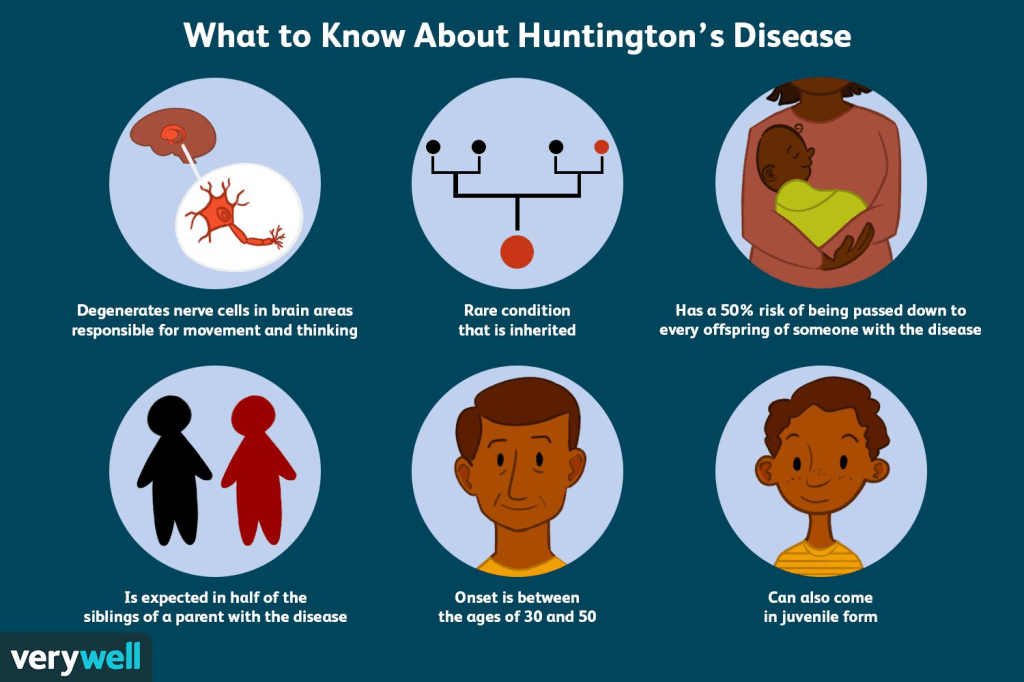
Huntington’s disease is an inheritable, neurodegenerative disorder marked by progressive loss of muscle control, resulting in involuntary muscle movements, jerks, and contractions. Affected areas include the hands, feet, face, and trunk. Dementia is also a very common symptom associated with progressive disorientation and confusion, personality disintegration, memory loss, restlessness, and agitation. Athetosis, or relatively slow, writhing, involuntary movements is also very common in patients with Huntington’s disease. The disease duration ranges from 10 years up to 25 years or more. Life-threatening complications can result from sicknesses like pneumonia or by becoming injured to do falling.
Huntington’s disease is inherited as an autosomal dominant trait. The disease comes from mutations to the “huntingtin” gene located on the p arm of the fourth chromosome (4p16.3). Those with the disorder have a huntingtin gene with errors in the nucleotide bases in the DNA. These errors result in the huntingtin gene containing abnormally long repeats of cytosine, adenine, and guanine. The length of these excess, expanded bases may be linked to the age of symptom onset. However, specific symptoms associated with Huntington’s disease are the result of degeneration to the neurons in the brain.
Symptoms:
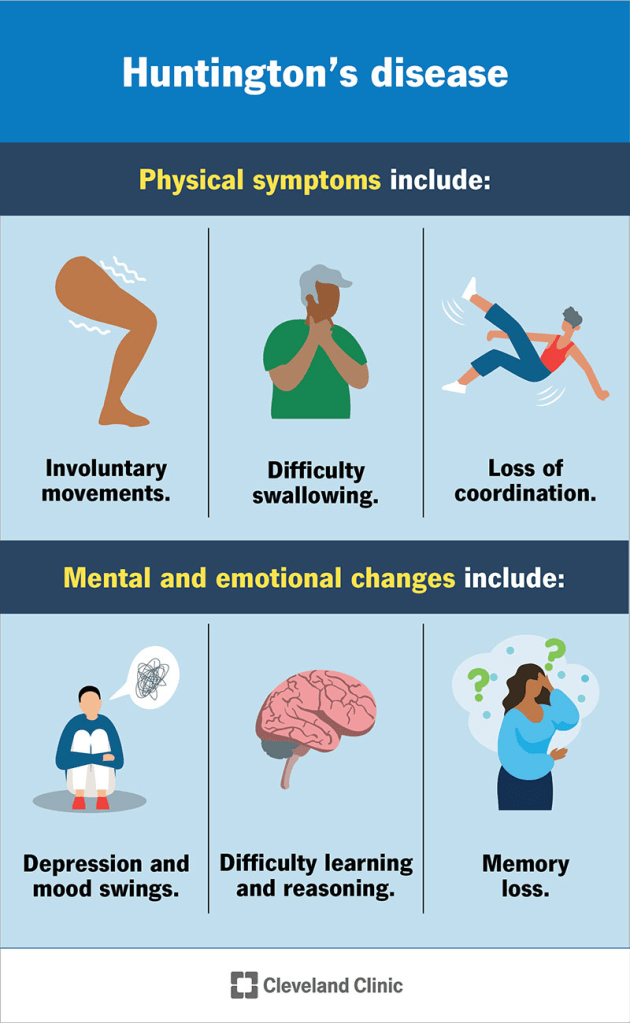
The characteristic symptoms of Huntington’s disease include uncontrollable muscle movements, loss of coordination, and personality changes. As the disease runs its course, the ability to speak becomes impaired, memory may fade, and the involuntary jerks worsen. Huntington’s disease has 25 year progressive course, and as time goes on, the uncontrolled jerks may fade, replaced by an absence of movement. Additionally, dementia can develop. Since those with Huntington’s disease experience muscle jerks, which progress into a lack of movement, they are likely to be bedridden, increasing their odds of getting pneumonia, as they are often undernourished as well.
Causes:
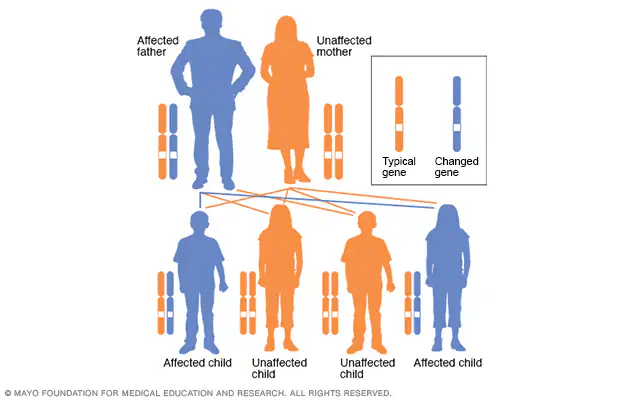
Huntington’s disease is an inheritable trait, and it is inherited in the autosomal dominant pattern. In dominant disorders like Huntington’s disease only one copy of the diseased gene is needed to express the disease, as it will mask the other normal gene. Since the disease is not sex-linked, the likelihood of an individual with Huntington’s disease having a child with the disease is 50%, regardless of gender.
The huntingtin gene controls the production of a particular protein found in the neurons. However, the function of the huntingtin protein is not known. People with Huntington’s Disease, have a huntingtin gene that contains unusually long repeats of coded instructions of three of the nitrogenous base pairs in the DNA-coded instructions. For example, some of those with the disease have over 35 CAG repeats within the huntingtin gene, with many even having more than 39 of these repetitions. Contrastingly, individuals without the disorder only have around 20 repeats of the gene. Extra CAG repeats are extremely unstable and have a high potential to expand further with future generations. This could be the cause of genetic anticipation in Huntington’s disease, a genetic phenomenon in which an patients with Huntington’s disease may develops symptoms significantly earlier than his or her affected parent, as a result of the expansion of repeated genetic material. Some researchers suggest that CAG repeats in the huntingtin gene are additionally unstable if the affected parent is the patient’s father.
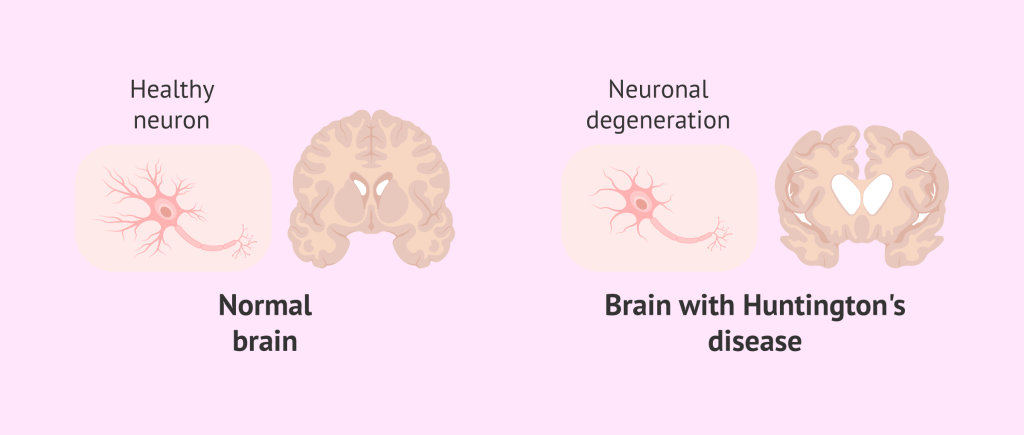
Symptoms of Huntington’s disease are caused by changes of nerve cells to various parts of the brain, such as the basal ganglia and cerebral cortex. The basal ganglia are specialized nerve cells in the brain, responsible for regulating movements, and the cerebral cortex plays a large role in regulating conscious thought and movement, causing dementia upon developing Huntington’s disease.
Diagnosis:
Huntington’s disease can be diagnosed through a clinical evaluation, detailed patient history, and other tests. X-ray studies, including computerized tomography (CT) scanning and magnetic resonance imaging (MRI) to create cross-sectional images of the brain. Additionally, electroencephalography (EEG) records electrical activity of the brain. All three tests aid in confirming the diagnosis. Additional tests such as neuropsychological or genetic testing can aid in diagnosis.
Treatment:
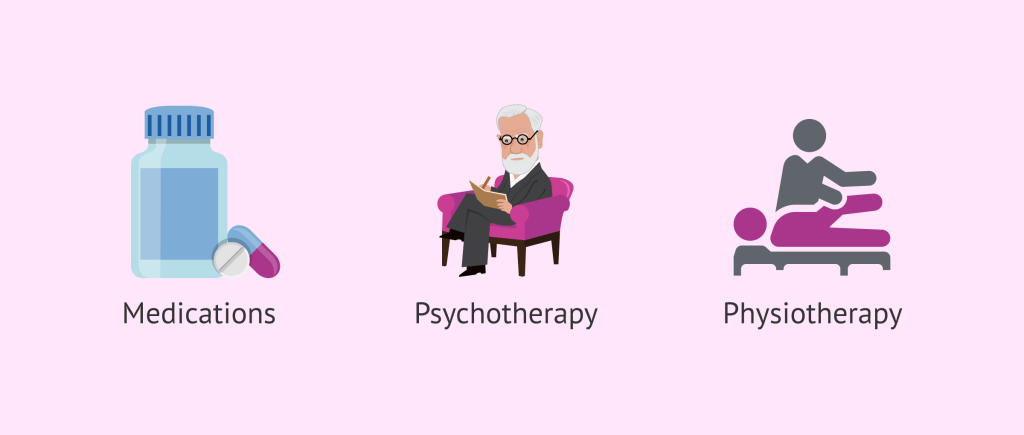
In 2008, the FDA approved Xenazine for the treatment of the jerky, involuntary movements associated with Huntington’s disease. The drug has been available in Europe for several years. Most treatment for Huntington’s disease, however, is symptomatic and supportive. Some treatments can alleviate various symptoms temporarily, including neuroleptic medication such as haloperidon, which is able to partially suppress the involuntary movement during the early stages of the disease. Consuming especially high calorie food can help an affected individual maintain weight, as well as avoid choking, especially so during the later stages of HD.
Genetic counseling, and clinical evaluations can help to detect any symptoms and physical characteristics associated with Huntington’s disease, as well as help to determine the severity of symptoms and ensure family members do not have the disease, too.
How You Can Make an Impact:
Without proper research, funding, and support for continued studies and clinical trials to determine possible cures, legitimate medicines for the disease, or preventative treatment, many more people will go on to develop Huntington’s disease. If you can, please donate here! If you are unable to donate, consider volunteering your time by raising awareness for this rare disease. If you’re interested in learning more about Huntington’s disease, donation opportunities, or the progress being made on potential treatments, visit Huntington’s Disease Society of America! Huntington’s Disease Society of America strives to “to [improve] the lives of everyone affected by Huntington’s disease. From community services and education to advocacy and research, HDSA is the world’s leader in providing help for today, hope for tomorrow for people with Huntington’s disease and their families. In the battle against Huntington’s disease no one fights alone.”
Let’s keep raising awareness! – Lily
References:
Huntington’s Disease – Symptoms, Causes, Treatment | NORD. (2008, August 15). NORD (National Organization for Rare Disorders); NORD. https://rarediseases.org/rare-diseases/huntingtons-disease/
 Rare Disease Insights
Leave a comment