What is Niemann-Pick Disease Type C?:
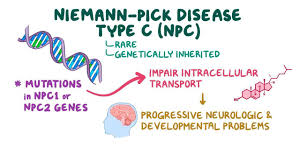
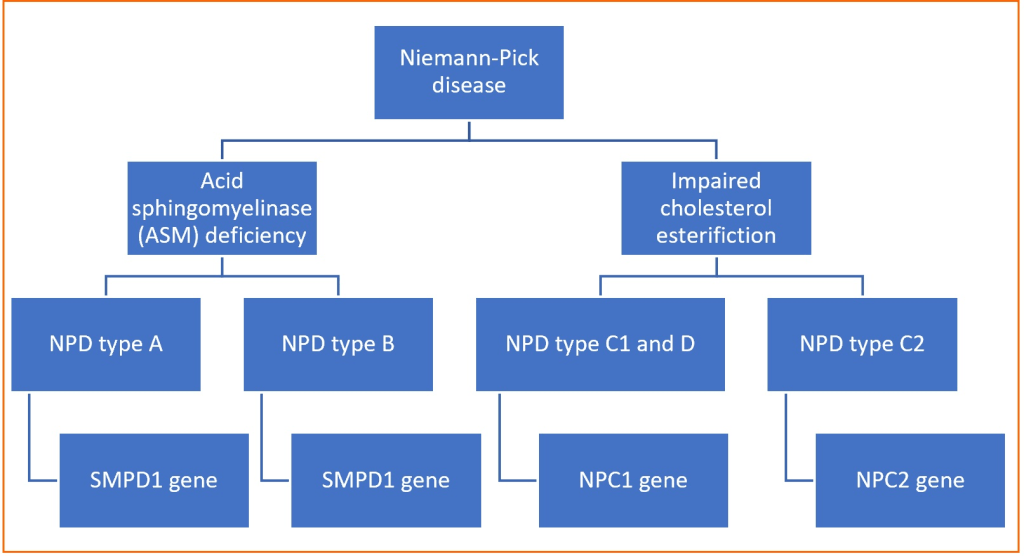
NPC is a lysosomal storage disorder, meaning the lysosomes, membrane-bounded digestive organelles that break down macromolecules, function improperly, causing a build up of cholesterol and other fats in the body’s tissues. This especially includes the brain tissue. There are two similar disorders called Niemann-Pick Disease Types A and B, but they are referred to as their own, separate disease.
Symptoms:
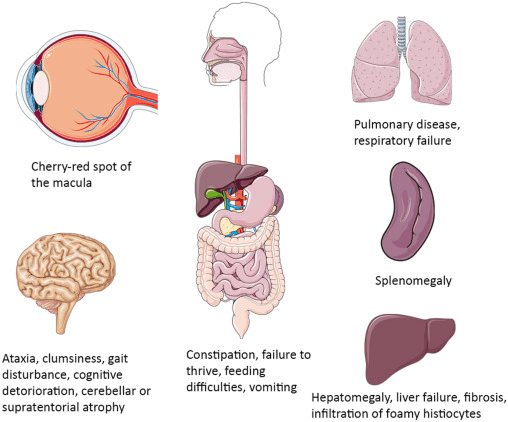
Symptoms of NPC can be set at many different ages, however the disease is most prevalent in childhood. The different age upon which the symptoms present themselves changes the severity of the symptoms. The different age groupings include perinatal, early infantile, late infantile, juvenile, and adult. NPC affects both psychological function as well as bodily organs, however, symptoms throughout the body arise and develop independently from each other. Symptoms affecting the internal organs are more common in younger age groups, but psychological symptoms tend to affect the older age groups, as they take longer to develop. It is important to note that many of these symptoms can go on to cause life-threatening complications if the disease goes undiagnosed in a child’s early years, into adulthood.
Prenatal Symptoms:
Prenatal symptoms include abdominal swelling, weak muscle tone, enlarged liver and spleen, jaundice, low platelet count, lung disease, liver failure, and/or poor growth.
Early Infantile Symptoms:
Early infantile symptoms include enlarged liver or spleen, jaundice, weak muscle tone of the core muscles, developmental delays, delayed speech, difficulty swallowing, rigid muscles, and/or difficulty moving one’s eyes up and down.
Late Infantile Symptoms:
Late infantile symptoms include prolonged jaundice, developmental delays/regression, delayed speech, clumsiness/loss of coordination, involuntary muscle contractions or jerks,
difficulty speaking and swallowing, seizures, sudden muscle weakness triggered by laughter, abnormal eye movements, and/or hearing loss.
Juvenile Symptoms:
Juvenile symptoms include poor school performance caused by learning disabilities, loss of language skills, clumsiness, progressive ataxia, slurred speech, abnormal muscle movements, poor coordination, difficulty swallowing, abnormal eye movements, sudden muscle weakness triggered by laughter, seizures, and/or behavioral problems.
Adolescent and Adult Symptoms:
Adolescent and adult symptoms include memory problems, difficulty thinking clearly, dementia, learning disabilities, schizophrenia, psychosis, depression, clumsiness, tremors, difficulty walking, speaking, and swallowing, and abnormal eye movements. Other symptoms more common in older patients include seizures, involuntary muscle contractions, causing abnormal movements or postures, tremors, narcolepsy, sleep apnea, depression, obsessive-compulsive disorder, bipolar disorder, and/or hallucinations.
End-Stage Disease Symptoms:
Symptoms at the end of the disease include aspiration pneumonia, respiratory failure, and uncontrollable epilepsy. Because of this, NPC can be diagnosed with depression or schizophrenia. However, the neurological decline can lead to life-threatening conditions and even death.
Causes:
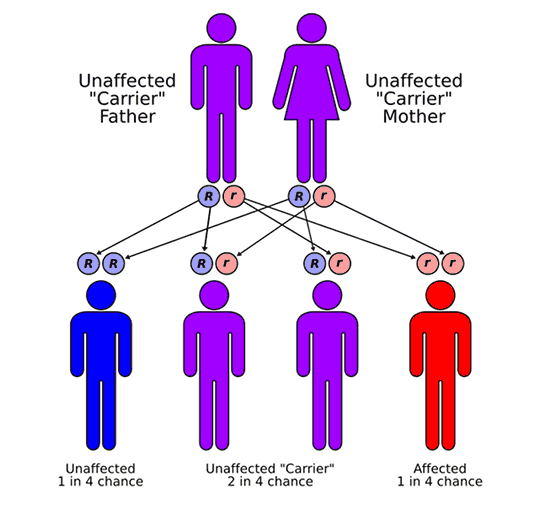
NPC is the result of a mutation to either the NPC1 or NPC2 gene. This causes either an excess or lack of a certain protein in the body, affecting many internal organs, including the brain. Though the function of the NPC1 and NPC2 genes is not known currently, scientists know the resulting protein is responsible for the transportation of macromolecules throughout the body. The disease-causing mutation causes a deficiency of the protein, allowing cholesterol to build up in the bodily tissues, including the brain, which causes the symptoms associated with NPC. Additionally, the mutated NPC gene is inherited in an autosomal recessive manner. This means two carriers, those with one normal gene and one disease-causing gene, have a 25% chance to have a child be normal, a 25% chance to have a child with the disease, and a 50% chance to have their child be a carrier, too.
Diagnosis:
NPC is diagnosed through thorough clinical evaluation and identification of symptoms. This may also include a series of specialized tests based on the characteristic symptoms of NPC. Laboratory tests must follow clinical evaluations to determine if there is any NPC gene-produced protein in the body or any of the associated fat build up. Unfortunately, physicians most often have very little experience with identifying NPC, causing a delay in diagnosis. However, scientists have developed a Suspicion Index Tool to help determine if a patient should be suspected of having NPC, bettering the time in which a patient could be diagnosed.
Treatment:
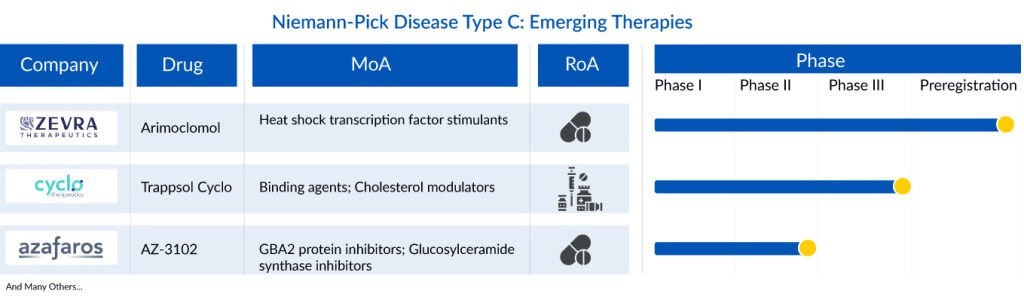
Treatment of NPC requires a team of specialists to handle one’s disease, especially since the cases are primarily in children, making a patient’s condition much more delicate. Emotional and psychological support for the affected individual’s family is provided as well. Genetic counseling is also very beneficial for a patient and their family to determine the possibility of anyone else having the disease.
Though most treatment of NPC is symptomatic, some studies have proven that the medication miglustat helps to slow the progression of some characteristic neurological symptoms of NPC. Miglustat blocks the synthesis of glycosphingolipids, the fat that accumulates in the brain of those with NPC. Miglustat helps offer a more comprehensive approach in managing NPC.
How You Can Make an Impact:
Without proper research, funding, and support for continued studies and clinical trials to determine possible cures, legitimate medicines for the disease, or preventative treatment, many more people will go on to develop Niemann-Pick Disease. If you can, please donate here! If you are unable to donate, consider volunteering your time by raising awareness for this rare disease. If you’re interested in learning more about Niemann-Pick Disease, donation opportunities, or the progress being made on potential treatments, visit the National Niemann-Pick Disease Foundation! The National Niemann-Pick Disease Foundation strives to “[create] an enduring patient support community that embodies strength, hope and empathy for those affected by all Niemann-Pick disease types. We believe deeply in the future of research that promotes clinical treatments with potential to improve patient quality of life and with intent to ultimately cure all Niemann-Pick disease types.”
Let’s keep raising awareness! – Lily
References:
Alyea, G., Porter, F. D., Bianconi, S. E., & Dang Do, A. N. (2024, September 25). Niemann Pick Disease Type C – Symptoms, Causes, Treatments | NORD. NORD (National Organization for Rare Disorders); NORD. https://rarediseases.org/rare-diseases/niemann-pick-disease-type-c/
 Rare Disease Insights
Leave a comment