What is Dercum’s Disease?:
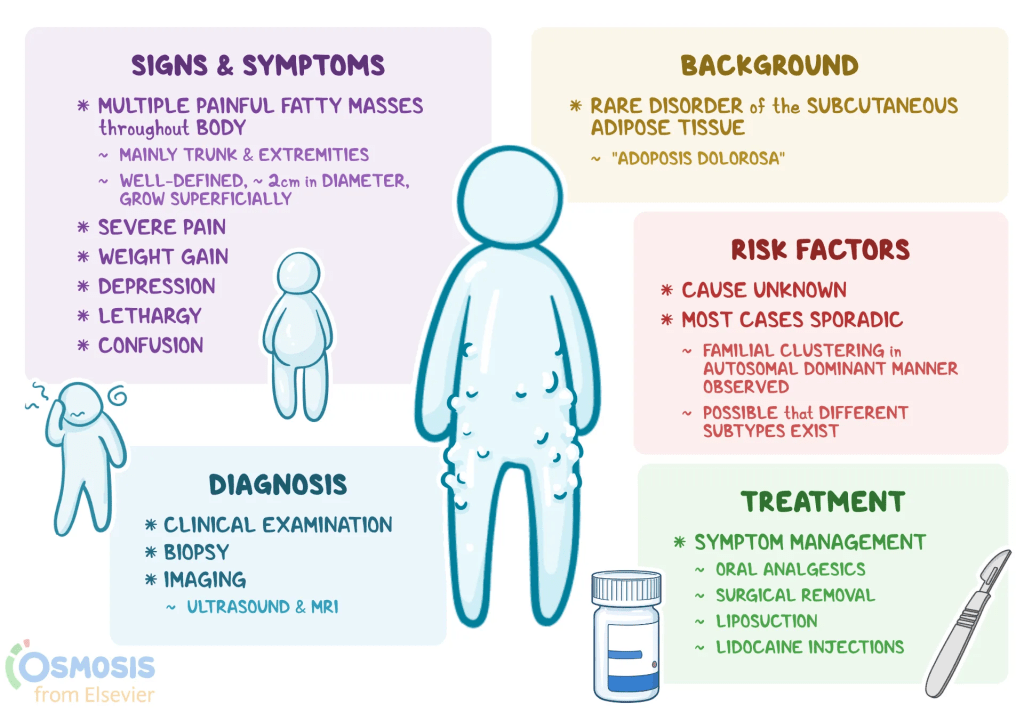
Dercum’s disease is a rare condition marked by multiple painful fatty tumors (lipomas), primarily located under the skin on the trunk, upper arms, and legs. These lipomas can also develop deeper in the body, attached to muscles, tendons, ligaments, or bones through connective tissue. The pain, which can be intense, is often due to pressure on nearby nerves or inflammation of the connective tissue (fascia). Classified as a loose connective tissue disorder, Dercum’s disease mostly affects adults, especially women. In addition to pain, symptoms may include weight gain, fatigue, depression, and confusion. The exact cause remains unknown.
Symptoms:
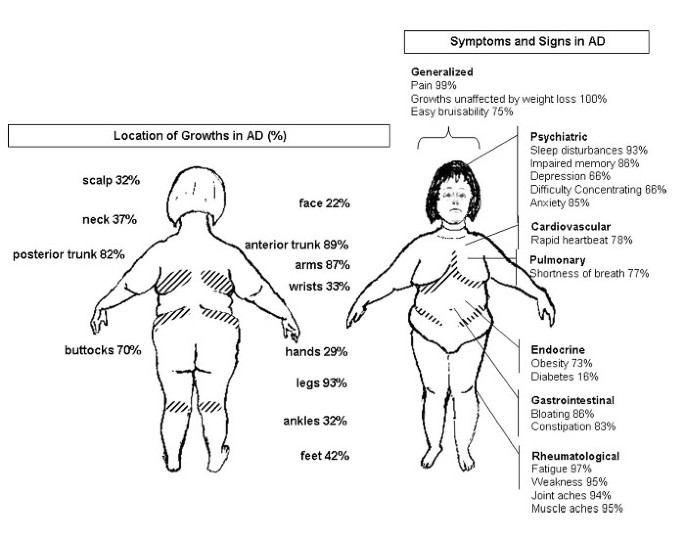
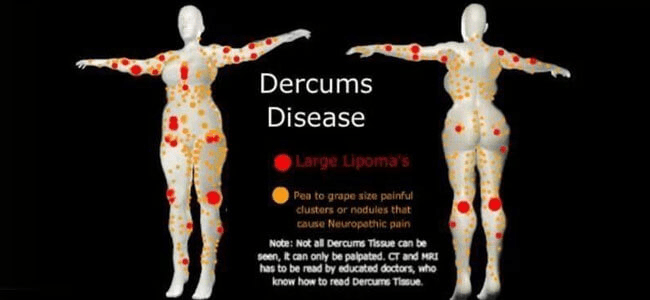
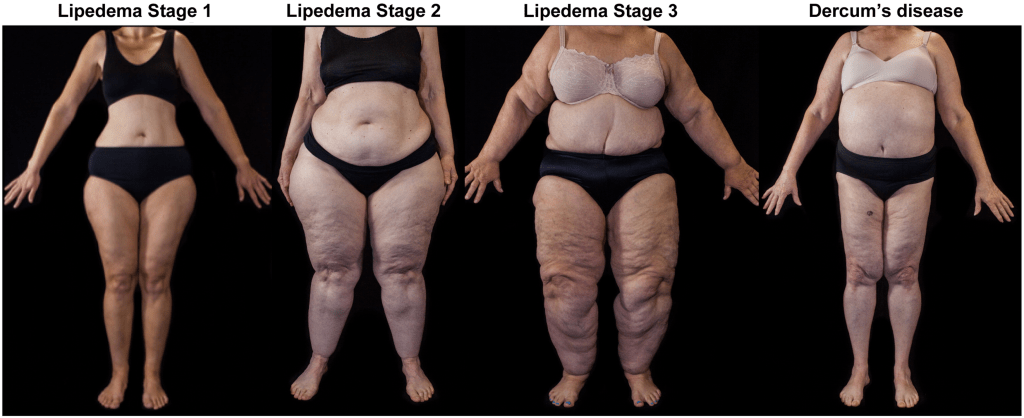
Dercum’s disease is a rare condition characterized by the development of multiple painful fatty tumors (lipomas) that are found just beneath the skin and, in some cases, deeper within the body. These lipomas most commonly appear on the trunk, upper arms, and upper legs, though they are rarely found in the head, neck, hands, or feet. The size of the lipomas can vary from small, pea-sized lumps to larger masses the size of a grape, plum, or even a fist. There are several recognized types of Dercum’s disease: the familial multiple lipomatosis (FML type), which can run in families; the angiolipoma type, where lipomas known to be painful develop; and the healing disorder type, which involves widespread lipomas in the subcutaneous fat, often around joints and ribs, potentially linked to underlying inflammation in the body.
Pain is the hallmark symptom of Dercum’s disease and must persist for at least three months to meet diagnostic criteria. It can range from mild discomfort to severe, persistent pain that is often out of proportion to physical findings. In some individuals, even slight pressure on fat tissue can be painful, and the discomfort may come and go or last continuously. Flares or exacerbations of pain are common and may be accompanied by fatigue and cognitive issues, often described as “brain fog.” The cause of the pain is not fully understood but may result from lipomas pressing on nerves or from inflammation in the connective tissue, known as fascia, which has a high concentration of pain receptors. People with Dercum’s disease often have lipomas with more connective tissue than usual, which may contribute to the pain. Fibromyalgia is frequently seen in those with Dercum’s, likely due to similar mechanisms involving fascia and nerve sensitivity.
Swelling in affected areas, particularly the limbs, is another common symptom. Sometimes only one limb may be swollen and more painful, possibly due to impaired lymphatic function or lymphedema. While the swelling may resolve on its own, manual treatments like massage or lymphatic drainage can help alleviate symptoms. Significant weight gain is also frequently observed and should be managed to prevent the development of metabolic conditions such as prediabetes or diabetes.
In addition to pain and swelling, individuals with Dercum’s disease may experience a wide range of other symptoms, including fatigue, weakness, easy bruising, morning stiffness, gastrointestinal discomfort, shortness of breath, heart palpitations, and headaches. Mental health issues such as depression, anxiety, irritability, memory problems, and concentration difficulties are also common. The condition has been associated with a number of other health problems, including arthritis, high blood pressure, heart disease, sleep disorders, dry eyes, and myxedema—a thyroid-related disorder characterized by dry skin, facial swelling, and cognitive decline. The exact cause of Dercum’s disease remains unknown.
Causes:
The exact cause of Dercum’s disease remains unknown, and in most cases, it seems to arise spontaneously without a clear trigger. However, underlying inflammation should be considered, as it may play a role. In rare cases, the condition has developed after physical trauma, such as a motor vehicle accident.
Some researchers suggest Dercum’s disease may be an autoimmune disorder, where the immune system mistakenly attacks the body’s own tissues. Other possible contributing factors include hormonal imbalances, disruptions in fat metabolism, high-dose corticosteroid use, and certain infections like Lyme disease or Valley fever.
While many cases are sporadic, some instances appear to run in families, indicating a potential genetic link. In these familial cases—particularly the familial multiple lipomatosis (FML) or angiolipomatosis types—the condition may follow an autosomal dominant inheritance pattern. This means only one copy of a mutated gene, inherited from either parent or caused by a new mutation, is enough to cause the disorder. Each child of an affected parent has a 50% chance of inheriting the condition, regardless of gender.
Diagnosis:
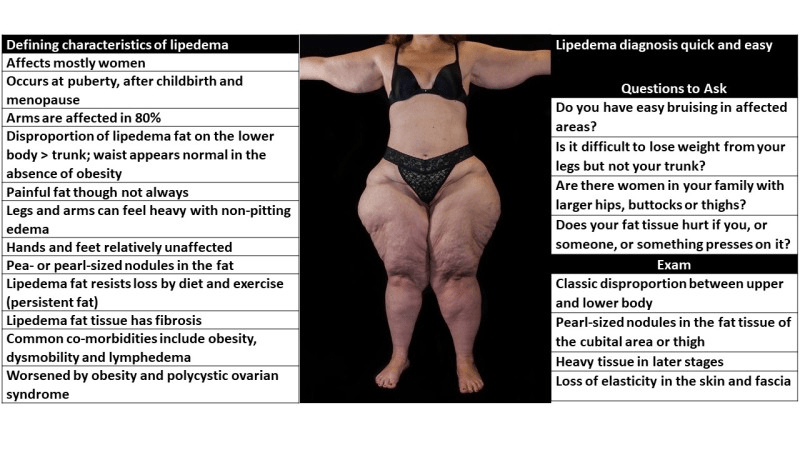
Diagnosing Dercum’s disease involves reviewing the patient’s medical history, conducting a detailed physical examination, and identifying the presence of multiple painful lipomas. The specific location and pattern of the lipomas help differentiate Dercum’s disease from other conditions involving similar fatty growths. A definitive diagnosis can be supported by surgically removing one of the growths and examining it under a microscope to confirm it is a lipoma.
Treatment:
There is currently no cure or specific treatment for Dercum’s disease. Management focuses on relieving symptoms, particularly chronic pain. Treatment approaches vary based on individual needs and the severity of symptoms.
Pain relief medications (analgesics) have been used with limited success, and corticosteroid injections have shown mixed results—one case even linked high doses to the possible onset of the disease. Intravenous lidocaine or ketamine may offer short-term pain relief for some individuals.
Surgical removal of lipomas can temporarily ease symptoms, but the inflammation caused by surgery might trigger the formation of new lipomas in the same area. Liposuction has also been used as a supportive treatment, sometimes reducing pain and improving quality of life, though its benefits may diminish over time.
Psychotherapy and consultation with pain specialists can help individuals manage chronic pain and emotional distress. Overall, treatment is supportive and tailored to managing each person’s specific symptoms.
How You Can Make an Impact:
Without proper research, funding, and support for continued studies and clinical trials to determine possible cures, legitimate medicines for the disease, or preventative treatment, many more people will go on to develop Dercum’s disease. If you can, please donate here! If you are unable to donate, consider volunteering your time by raising awareness for this rare disease. If you’re interested in learning more about Dercum’s disease, donation opportunities, or the progress being made on potential treatments, visit the Dercum’s Society! The Dercum’s Society strives to “raise awareness of Dercum’s Disease among both medical professionals and the general public… [and] to offer hope and support for Dercum’s patients and their families.”
Let’s keep spreading awareness – Lily
References:
Herbst, Karen. “Dercum’s Disease – Lipoma Symptoms, Causes, Treatment | NORD.” NORD (National Organization for Rare Disorders), 26 Mar. 2020, rarediseases.org/rare-diseases/dercums-disease/. Accessed 20 Apr. 2025.
 Rare Disease Insights
Leave a comment