What is Buerger’s Disease?:
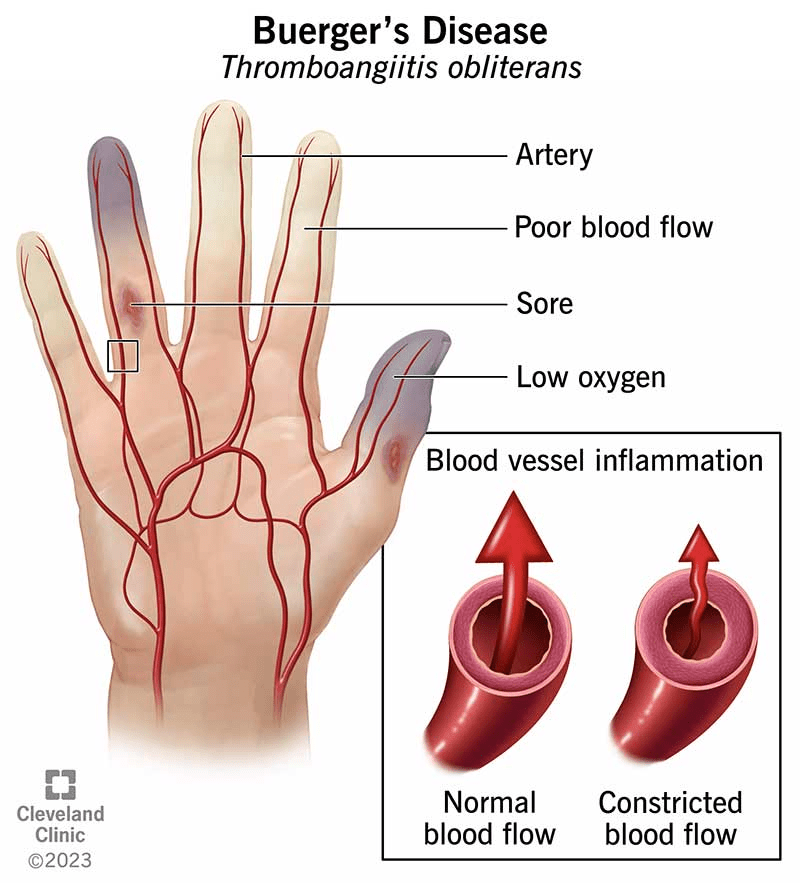
Buerger’s disease, or thromboangiitis obliterans, is a rare condition that primarily affects young to middle-aged men who smoke. It involves inflammation and blockage of small and medium-sized blood vessels in the limbs, leading to reduced blood flow. The legs are more commonly impacted than the arms. Early symptoms typically include intense pain in the lower limbs at rest and sometimes leg cramps during walking. Other signs may include numbness, tingling, ulcers on the extremities, and sensitivity to cold. Some individuals may also develop inflamed, clotted veins. In advanced cases, the disease can lead to gangrene. Although the exact cause is unknown, it is strongly associated with tobacco use.
Symptoms:
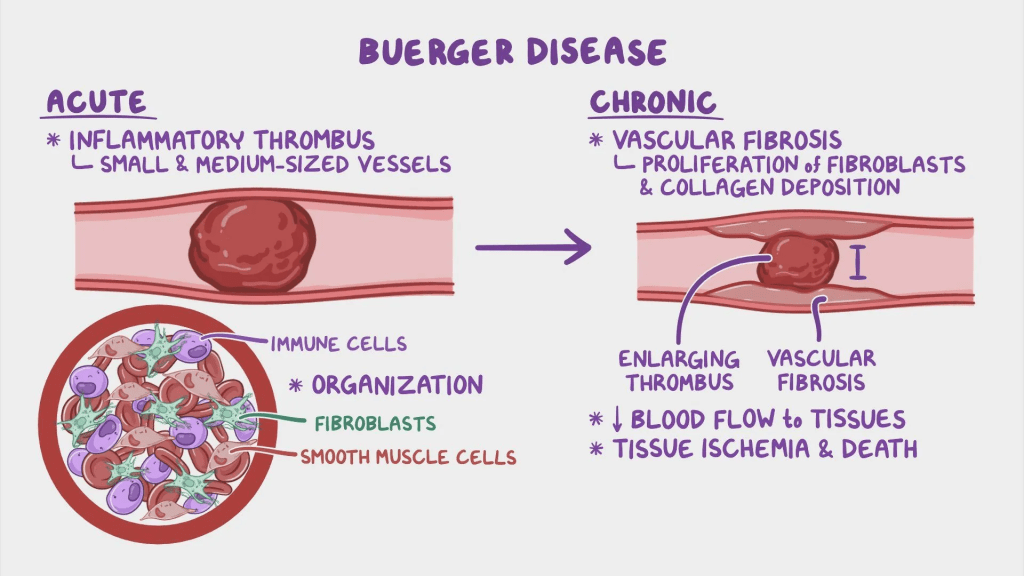
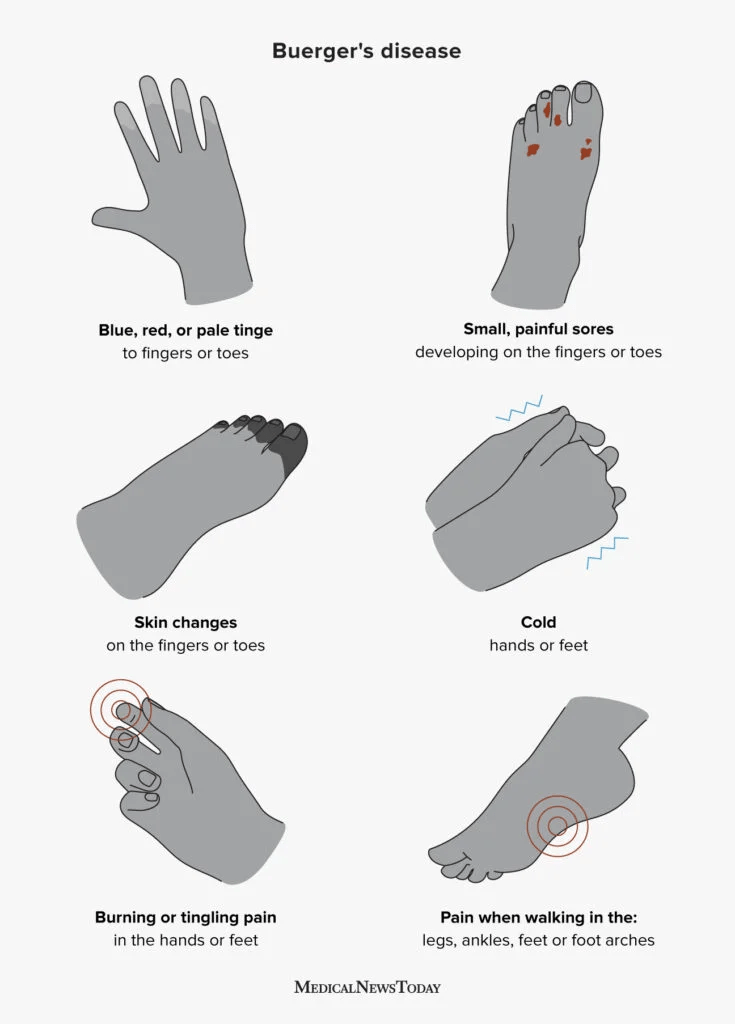
Buerger’s disease involves the narrowing or blockage of small and medium-sized arteries and veins in the limbs, leading to decreased blood flow. It usually occurs in sudden flare-ups lasting one to four weeks and often recurs over time. The initial symptom is typically intense pain in the lower arms or legs during rest. Some people may also experience leg cramps while walking, occasionally causing limping. Additional symptoms may include painful ulcers on the limbs, pale or discolored hands, numbness, tingling, sensitivity to cold, and inflamed or clotted veins. Ulcers, particularly on the fingertips or toes, can be very painful and may worsen when the limb is raised. In severe cases, tissue death may occur. Less commonly, the disease can affect blood vessels in the intestines, leading to abdominal pain and weight loss. In fewer than 2% of cases, neurological symptoms have also developed.
Causes:
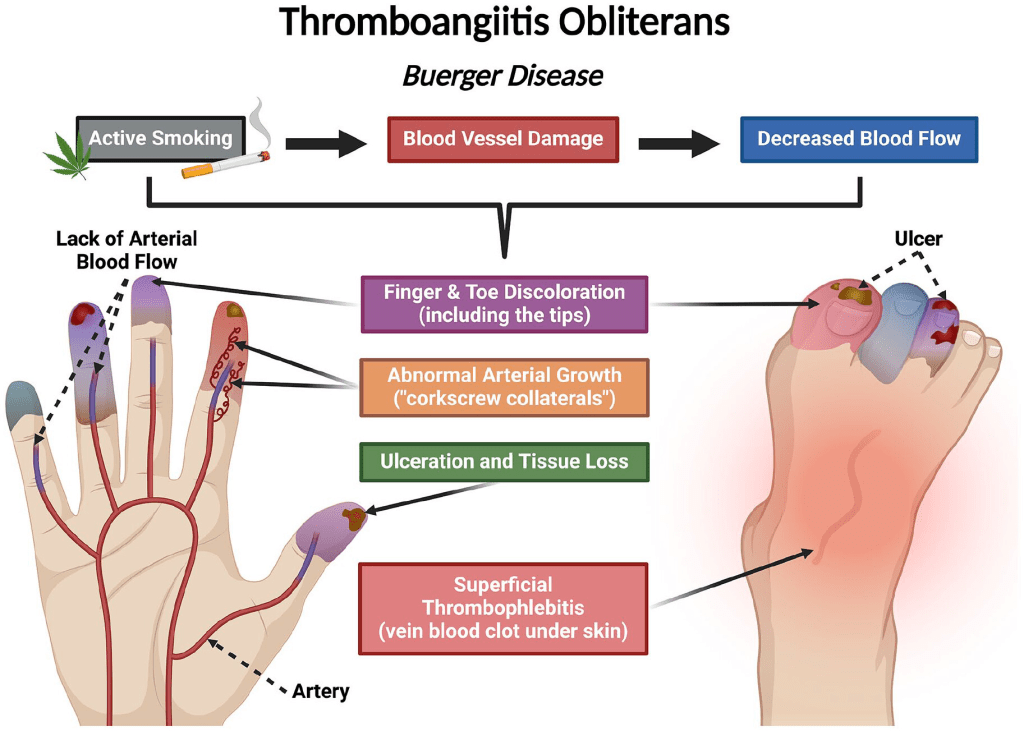
The exact cause of Buerger’s disease is still unclear, but it is strongly linked to tobacco use. Most experts agree that current or past tobacco use is almost always present in diagnosed cases, although how tobacco triggers the disease is not fully understood.
Some researchers suspect it may be an autoimmune condition, where the immune system mistakenly attacks healthy tissues. In some cases, physical injury to the hands or feet might also contribute. Since the disease appears more frequently in certain ethnic groups, genetics may influence its development or severity, though more research is needed to confirm this. Symptoms arise due to reduced blood flow, primarily affecting the arms and legs.
Diagnosis:

Buerger’s disease is typically diagnosed based on a person’s symptoms and physical signs. A history of tobacco use is often considered essential for diagnosis. To confirm the condition, doctors may use imaging tests like angiography, which involves injecting a contrast dye to make blood vessels visible on X-rays. Noninvasive imaging methods may also be used.
Treatment:
Treatment for Buerger’s disease focuses on relieving symptoms and providing supportive care. Quitting smoking is the most effective step, causing symptoms to improve significantly, and in some cases, the disease may go into full remission. If smoking continues, treatment avoids unnecessary surgery and instead uses conservative methods. These may include medications to prevent blood clots, widen blood vessels, reduce inflammation, fight infections, and manage pain.
Surgical options are considered in more severe cases. These may involve a sympathectomy, where certain nerve pathways are disrupted to improve blood flow, or bypass surgery to reroute blood around blocked vessels. In advanced stages, amputation of affected limbs or digits may be necessary.
How You Can Make an Impact:
Without proper research, funding, and support for continued studies and clinical trials to determine possible cures, legitimate medicines for the disease, or preventative treatment, many more people will go on to develop Buerger’s disease. If you can, please donate here! If you are unable to donate, consider volunteering your time by raising awareness for this rare disease. If you’re interested in learning more about Buerger’s disease, donation opportunities, or the progress being made on potential treatments, visit the Foundation to Advance Vascular Cures! The Foundation to Advance Vascular Cures strives to procure “better treatments and care that more closely align with patient needs, ultimately contributing to a world where everyone has the opportunity to enjoy vascular health.”
Let’s keep spreading awareness! – Lily
References:
Buerger’s Disease – Symptoms, Causes, Treatment | NORD. (2007, September 23). NORD (National Organization for Rare Disorders); NORD. https://rarediseases.org/rare-diseases/buergers-disease/
 Rare Disease Insights
Leave a comment