What is Mesothelioma?:
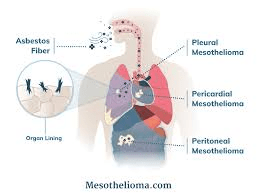
Mesothelioma is a rare and aggressive cancer that develops in the mesothelium, which is the protective lining covering many internal organs. This lining consists of two layers of mesothelial cells: one surrounding the organs and another forming a protective sac. The most common type is pleural mesothelioma, which affects the lining of the lungs and chest cavity. It can also develop in the abdominal lining (peritoneum), the heart lining (pericardium), and in rare cases, the membrane around the testicles.
Mesothelioma typically affects older adults and has a poor outlook. For example, people with pleural mesothelioma often have a median survival of just 12 to 14 months, even with treatment, which is not always effective.
Cancer, including mesothelioma, involves uncontrolled cell growth that can invade nearby tissues and spread throughout the body. Mesothelioma is most often linked to asbestos exposure, which accounts for 70 to 80 percent of cases. Symptoms usually appear decades after exposure, often 30 to 50 years later, but once they emerge, the disease can progress quickly and become life-threatening.
Symptoms:

Mesothelioma symptoms differ based on the cancer’s location, type, and stage. In the early stages, many individuals show no symptoms, and the disease can be hard to detect through X-rays. The most common form, pleural mesothelioma, affects the lining of the lungs and occurs in about 85% of cases. It often leads to a buildup of fluid around the lungs, known as pleural effusion, which can cause shortness of breath, chest pain, or a persistent cough. In later stages, difficulty swallowing and noticeable lumps under the skin of the chest may develop.
When mesothelioma affects the lining of the abdomen, known as peritoneal mesothelioma, symptoms may include abdominal pain, unexplained weight loss, nausea, vomiting, diarrhea, reduced appetite, anemia, and fluid accumulation in the abdominal cavity (ascites). In more advanced stages, a blockage in the intestines may also occur. Pericardial mesothelioma, which affects the lining around the heart, is rare but can cause chest pain, breathing difficulties, irregular heartbeat, and low blood pressure.
People with mesothelioma may also experience general symptoms such as fever, fatigue, night sweats, unexplained weight loss, and a general feeling of being unwell. In extremely rare cases, the disease can arise in the lining of the testicles, which is an extension of the peritoneal mesothelium that reaches into the scrotum.
Causes:
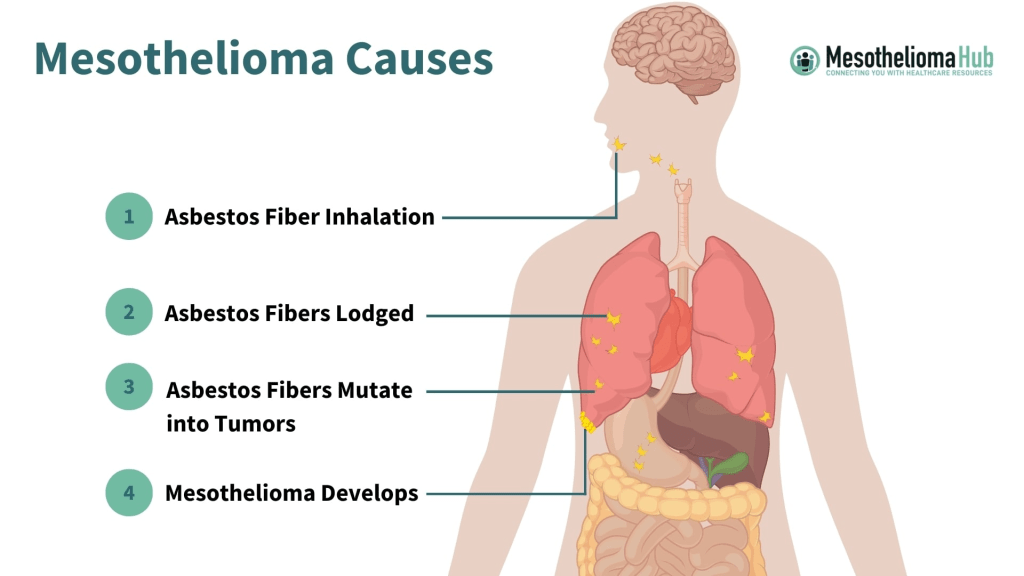
Mesothelioma is a rare type of cancer that usually affects the lining of the lungs or abdomen. The main known cause is exposure to asbestos, a heat-resistant material that was once widely used in construction, insulation, and other products. Most people who develop mesothelioma (around 70 to 80 percent) have been exposed to asbestos at some point, often through their jobs. Even brief or indirect exposure, such as living with someone who worked around asbestos, can increase the risk. Asbestos fibers, especially certain types like crocidolite, are dangerous when breathed in or swallowed. These fibers can stay in the body for years and eventually cause cancer.
Another material called erionite, which is similar to asbestos, has also been linked to mesothelioma in some places like Turkey and parts of the United States. In those areas, both environmental exposure and inherited traits may contribute to higher rates of the disease. In rare cases, people develop mesothelioma without any known exposure to asbestos or erionite. The cause in these cases is not fully understood. Possible factors include radiation, certain chemicals, or unknown environmental triggers. A virus called SV40 was once suspected, but it is now believed not to be a real cause.
Not everyone who is exposed to asbestos develops mesothelioma. This suggests that genetics may play a role. Some people may inherit gene mutations, especially in a gene called BAP1, that make them more likely to develop this cancer. People with this mutation may also have a higher risk of getting other types of cancer, such as skin or eye cancer. However, most people with mesothelioma do not have inherited gene mutations. Researchers are still working to understand why some people get the disease and others do not.
Diagnosis:
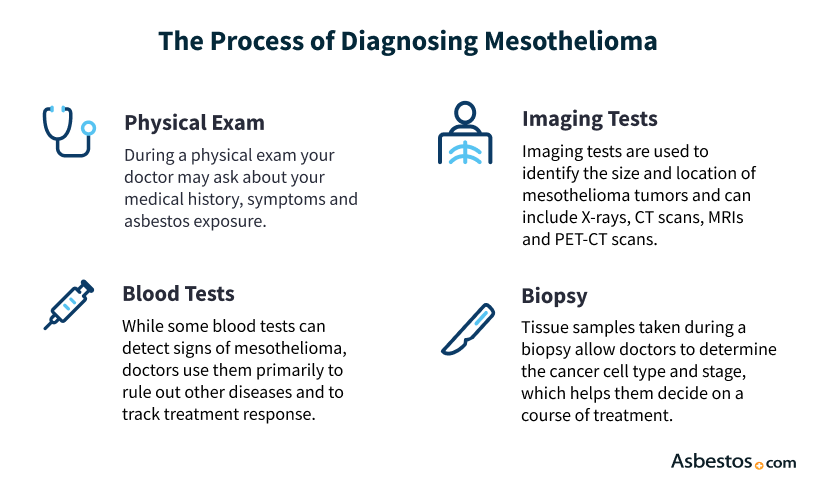
A diagnosis of mesothelioma is made through a comprehensive clinical evaluation that includes a detailed medical history, physical examination, and specialized tests such as chest X-rays, blood tests, and lung function assessments. Imaging techniques are crucial in evaluating the size, location, and spread of the tumor. Common imaging methods include computerized tomography (CT) scans, which provide cross-sectional images of chest tissues, and positron emission tomography (PET) scans, which show the body’s metabolic activity. In some cases, magnetic resonance imaging (MRI) may be used to offer additional detail, particularly for patients being considered for surgery.
To confirm the presence of mesothelioma, a biopsy, which is the removal and microscopic examination of tissue, is typically required. This can be done through different techniques, such as needle biopsy guided by ultrasound or CT imaging, or more advanced procedures like video thoracoscopy. In thoracoscopy, a thin, camera-equipped tube is inserted into the chest to view the lungs and obtain tissue samples. Similarly, laparoscopy is used to examine the abdominal lining. If these methods do not yield enough tissue, more invasive surgical approaches such as thoracotomy or laparotomy may be needed.
Once diagnosed, the disease must be staged to assess how far it has spread and to guide treatment. Staging may involve additional procedures like mediastinoscopy to biopsy lymph nodes in the chest or laparoscopy to check for abdominal involvement, especially when imaging alone is inconclusive. Although staging is a critical part of the diagnostic process, there is no universally accepted system for mesothelioma, and several staging models exist in the medical literature.
Treatment:

The treatment of mesothelioma typically involves a coordinated, multidisciplinary team of healthcare professionals. This team may include medical oncologists (specialists in cancer diagnosis and chemotherapy), radiation oncologists, surgeons, oncology nurses, and other specialists, depending on the tumor’s location. In addition to medical care, providing psychological and emotional support to patients and their families is essential due to the disease’s complexity and emotional impact.
Therapeutic approaches vary based on several factors, including the tumor’s location, stage, grade, whether it has spread, the patient’s age, overall health, and personal preferences. Treatment decisions should be made collaboratively between the healthcare team and the patient, ideally with input from specialists experienced in mesothelioma care, often found at major medical centers with expertise in this rare and aggressive cancer.
Surgery is often a key component of treatment, aiming to remove the tumor and affected tissues. In pleural mesothelioma, a pleurectomy may be performed to remove the chest lining, or a more extensive procedure called extrapleural pneumonectomy may be done, removing the pleura, lung, diaphragm, and pericardium. In peritoneal mesothelioma, surgery may involve removing the abdominal lining and nearby tissues. Surgical procedures can also help relieve symptoms by draining fluid buildup in the chest or abdomen.
Radiation therapy is another common treatment, used either after surgery to target remaining cancer cells or as a standalone option if surgery is not possible. Radiation damages the DNA of rapidly dividing cancer cells, slowing or stopping their growth. While efforts are made to limit damage to healthy tissue, some side effects can occur due to unavoidable exposure to nearby healthy cells. Chemotherapy may be recommended for patients with advanced, metastatic, or recurrent disease, or those who are not candidates for surgery. Combination chemotherapy, which uses multiple drugs with different mechanisms, is typically more effective than single-drug regimens. In some cases, patients receive multimodal therapy, which combines surgery, chemotherapy, and radiation for a more comprehensive approach.
Several drug therapies have received FDA approval for mesothelioma. In 2004, pemetrexed (Alimta) combined with cisplatin was approved for treating pleural mesothelioma when surgery is not an option. More recently, in 2020, a combination of nivolumab (Opdivo) and ipilimumab (Yervoy) was approved as a first-line treatment for adults with unresectable malignant pleural mesothelioma. Finally, palliative treatments play an important role in symptom relief. Procedures such as thoracentesis (removal of fluid from the chest) and paracentesis (removal of fluid from the abdomen) can significantly reduce discomfort and improve quality of life for patients experiencing fluid buildup due to the disease.
How You Can Make an Impact:
Without proper research, funding, and support for continued studies and clinical trials to determine possible cures, legitimate medicines for the disease, or preventative treatment, many more people will go on to develop Mesothelioma. If you can, please donate here! If you are unable to donate, consider volunteering your time by raising awareness for this rare disease. If you’re interested in learning more about mesothelioma, donation opportunities, or the progress being made on potential treatments, visit the Mesothelioma Research Foundation of America. MESORFA strives “to fund research that will lead to the quickest cure for mesothelioma.”
References:
Testa, Joseph. “Mesothelioma – Symptoms, Causes, Treatment | NORD.” NORD (National Organization for Rare Disorders), NORD, 26 Oct. 2020, rarediseases.org/rare-diseases/mesothelioma/. Accessed 29 June 2025.
Let’s keep spreading awareness! – Lily
 Rare Disease Insights
Leave a comment