What is Usher Syndrome?:
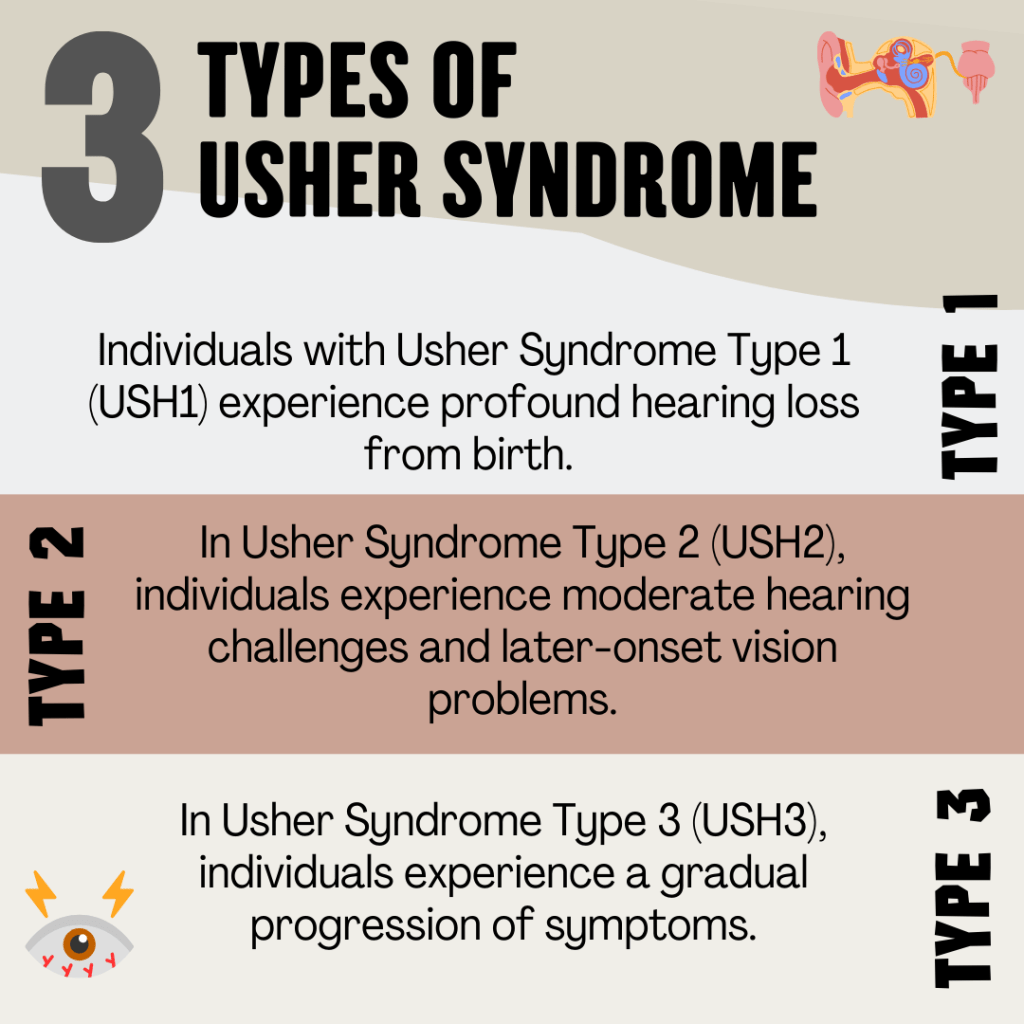
Usher syndrome is a rare inherited disorder that affects both hearing and vision. It is primarily characterized by sensorineural hearing loss, which occurs when the inner ear and auditory nerves are unable to properly transmit sound signals to the brain. In addition to hearing impairment, individuals with Usher syndrome experience retinitis pigmentosa, a progressive eye condition that gradually damages the retina and leads to worsening vision over time. There are three clinical types of Usher syndrome, each defined by differences in the age of onset, the rate of progression, and the severity of symptoms. These differences are determined by the specific genetic mutations involved. Usher syndrome is passed down in an autosomal recessive pattern, meaning a person must inherit one faulty gene from each parent in order to develop the condition.
Symptoms:
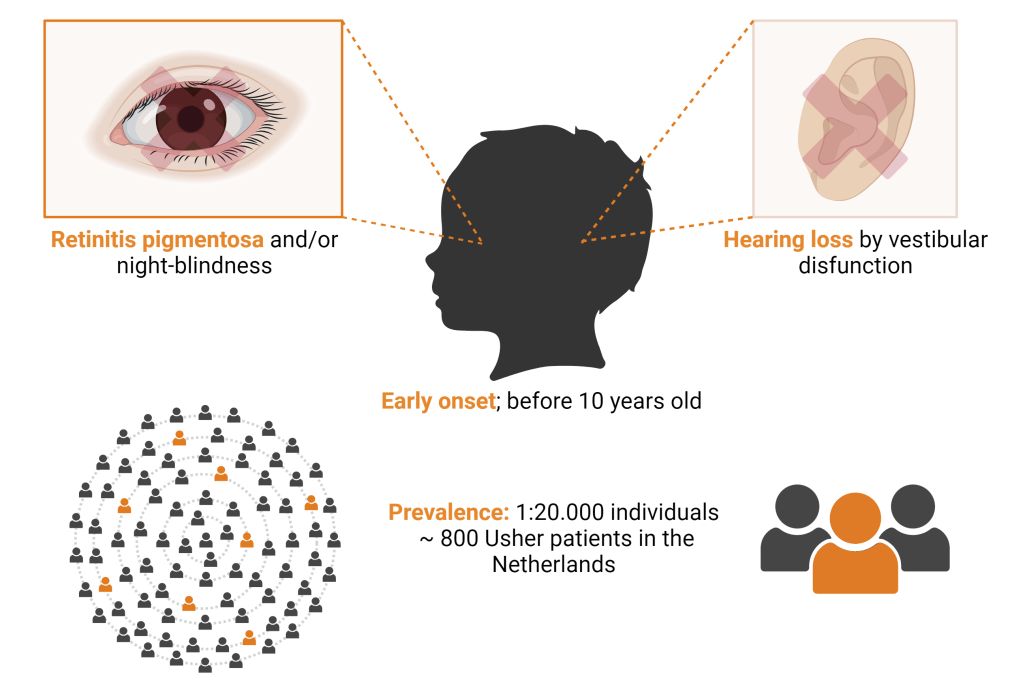
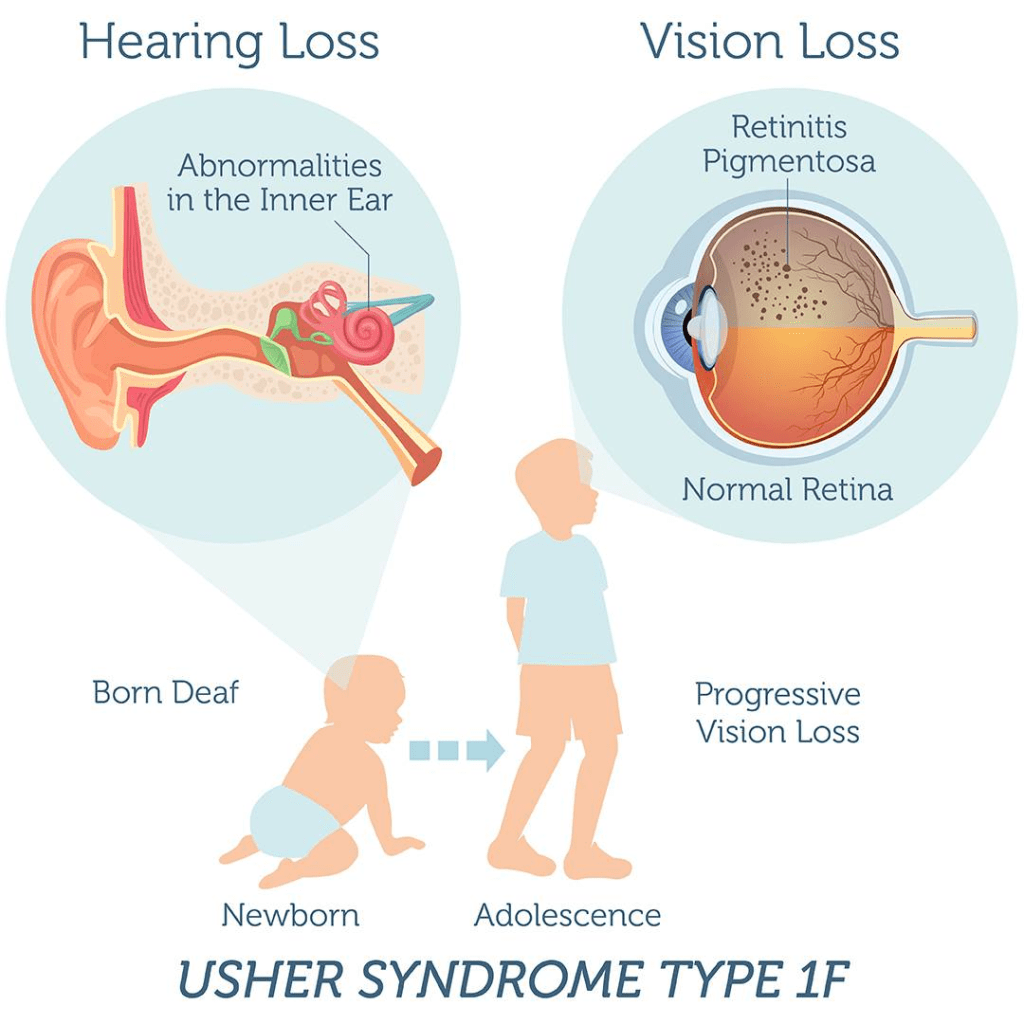
Usher syndrome is a genetic disorder that affects both hearing and vision. It is marked by sensorineural hearing loss, which results from the inner ear and auditory nerves being unable to properly send sound signals to the brain. It also involves retinitis pigmentosa, a condition where pigmented material accumulates on the retina, the light-sensitive layer at the back of the eye. This leads to progressive retinal degeneration, causing gradual vision loss and often resulting in legal blindness. Hearing loss can range from mild to profound and may worsen over time. Vision loss typically begins with difficulty seeing at night or in dim lighting, a symptom known as night blindness. While side vision gradually narrows, leading to tunnel vision, central vision can often remain clear for many years. Problems with balance are most common in individuals with Usher syndrome types 1 and 3, but can also occur in type 2.
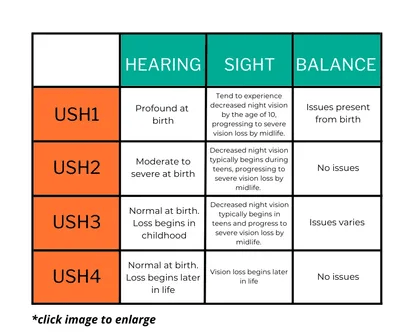
Usher syndrome is classified into three types based on the severity and timing of symptoms. Type 1 is the most severe form, characterized by profound hearing loss present at birth and significant balance issues. Children with type 1 often experience delays in walking, usually not taking their first steps until around 18 months or later. Vision problems usually begin around age ten or during the early teenage years, although some cases appear earlier. Type 2 involves moderate to severe hearing loss from birth, which may worsen gradually. Vision issues typically appear in the late teenage years or early twenties, and while peripheral vision continues to decline, central vision often remains stable into adulthood. The progression of vision loss in type 2 is generally slower than in type 1.
Type 3 is less common and usually involves hearing loss that begins later in life, often between the second and fourth decades. The degree of hearing loss and balance difficulties in type 3 can vary widely. About half of individuals with type 3 experience issues with balance, and vision loss also occurs later than in the other types.
Causes:
Usher syndrome is caused by mutations in specific genes that are involved in the normal functioning of hearing, vision, and balance. To date, at least nine genes have been linked to the condition. For Usher syndrome type 1, the known genes include MYO7A (USH1B), USH1C, CDH23, PCDH15 (USH1F), and SANS (USH1G). The CIB2 gene was previously thought to be related to type 1 (USH1J), but research now suggests it is associated with non-syndromic hearing loss and not with Usher syndrome.
For Usher syndrome type 2, the associated genes are USH2A, ADGRV1 (formerly known as VLGR1 or GPR98), and WHRN (DFNB31). Type 3 is linked to the USH3A (CLRN1) gene. Another gene, HARS, was once reported to be associated with type 3B, but no supporting evidence has emerged since the initial study in 2012, making it unlikely to be involved in Usher syndrome.
These genes provide instructions for making proteins that play critical roles in the sensory systems. Some of these proteins are essential for the function of hair cells in the inner ear, which help transmit sound to the brain, and for light-sensing cells in the retina, which are responsible for vision. However, the function of some proteins related to Usher syndrome remains unclear. In some cases, individuals diagnosed with Usher syndrome do not have detectable mutations in any of the known genes, suggesting that additional, yet-to-be-identified genes may also be involved. Moreover, there are other genes that can cause hearing, vision, or balance issues but do not lead to Usher syndrome specifically.
All forms of Usher syndrome are inherited in an autosomal recessive pattern. This means a person must inherit two copies of a mutated gene, one from each parent, to develop the condition. Individuals who inherit only one mutated gene and one normal gene are carriers and typically do not show symptoms. When both parents are carriers, each pregnancy carries a 25% chance that the child will inherit the condition, a 50% chance the child will be a carrier like the parents, and a 25% chance the child will inherit two normal genes. These risks are the same for both males and females. The likelihood of both parents carrying the same recessive gene is higher if they are closely related by blood, which increases the risk of having a child with a recessive genetic disorder like Usher syndrome.
Diagnosis:
Usher syndrome is diagnosed through a combination of hearing, vision, and balance evaluations. A hearing exam, known as an audiologic test, measures how well a person can detect sounds at different volumes and frequencies. To assess vision, a retinal exam is performed to examine the retina and other parts at the back of the eye. An electroretinogram (ERG) may also be used, which records the electrical activity of the retina in response to light and helps identify damage to light-sensitive cells. Balance function is evaluated using various tests that assess how well different parts of the balance system are working.
In addition to these clinical evaluations, genetic testing is available to identify mutations in the known genes associated with Usher syndrome. This testing is an important tool to confirm the diagnosis, especially when the clinical symptoms suggest Usher syndrome but are not definitive on their own.
Treatment:
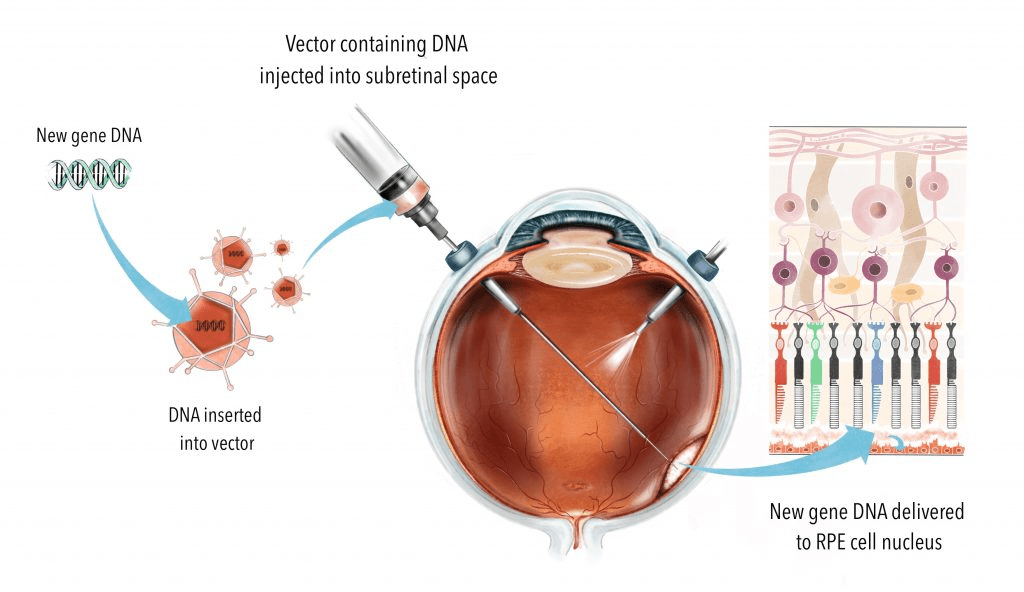
The treatment of Usher syndrome focuses on managing the specific symptoms present in each individual. This often requires a team of healthcare professionals working together, including pediatricians or internists, specialists in hearing and balance such as otolaryngologists and audiologists, and eye doctors such as ophthalmologists. Other support staff may also be involved, depending on the individual’s needs.
Addressing sensorineural hearing loss early is crucial to support language development in children. Hearing aids or cochlear implants are often beneficial for infants and children with Usher syndrome. Communication methods such as American Sign Language may also be introduced, with some individuals transitioning to tactile signing as their vision declines. Early intervention services are essential in helping children with Usher syndrome reach their full potential. Additional resources such as specialized education services for those with deafness or deaf-blindness, along with medical, social, and vocational support, may also be helpful.
At present, there is no cure for retinitis pigmentosa (RP), the progressive vision loss associated with Usher syndrome. However, research is ongoing into genetic therapies and other approaches to slow or reverse vision and hearing loss. Some studies suggest that vitamin A supplementation may slow the progression of RP in certain individuals, particularly those with Usher syndrome type 2. A commonly recommended dose is 15,000 IU of vitamin A palmitate per day for adults with common forms of RP, under the supervision of an ophthalmologist. It is important to maintain a balanced diet and avoid high doses of vitamin E, as this may interfere with the benefits of vitamin A. Since excessive intake of vitamin A can lead to serious side effects, including liver damage, anyone considering this treatment should consult a doctor and receive regular monitoring.
People with RP may also benefit from low-vision aids, which can help make the most of remaining vision. Other treatments for Usher syndrome are supportive and based on the individual’s symptoms. Organizations that assist those with combined hearing and vision loss can offer additional support and resources.
Genetic counseling is strongly recommended for individuals with Usher syndrome and their families. It can provide valuable information about the condition, help with family planning decisions, and offer emotional support.
How You Can Make an Impact:
Without proper research, funding, and support for continued studies and clinical trials to determine possible cures, legitimate medicines for the disease, or preventative treatment, many more people will go on to develop Usher Syndrome. If you can, please donate here! If you are unable to donate, consider volunteering your time by raising awareness for this rare disease. If you’re interested in learning more about Usher Syndrome, donation opportunities, or the progress being made on potential treatments, visit the Usher Syndrome Society. The Usher Syndrome Society strives “to raise public awareness and research funds for every type of Usher syndrome to find treatments and ultimately a cure for Usher Syndrome.”
Let’s keep spreading awareness! – Lily
References:
Kenna, M. (2023, August 14). Usher Syndrome – Symptoms, Causes, Treatment | NORD. NORD (National Organization for Rare Disorders); NORD. https://rarediseases.org/rare-diseases/usher-syndrome/
 Rare Disease Insights
Leave a comment