What is Paget’s Disease?:
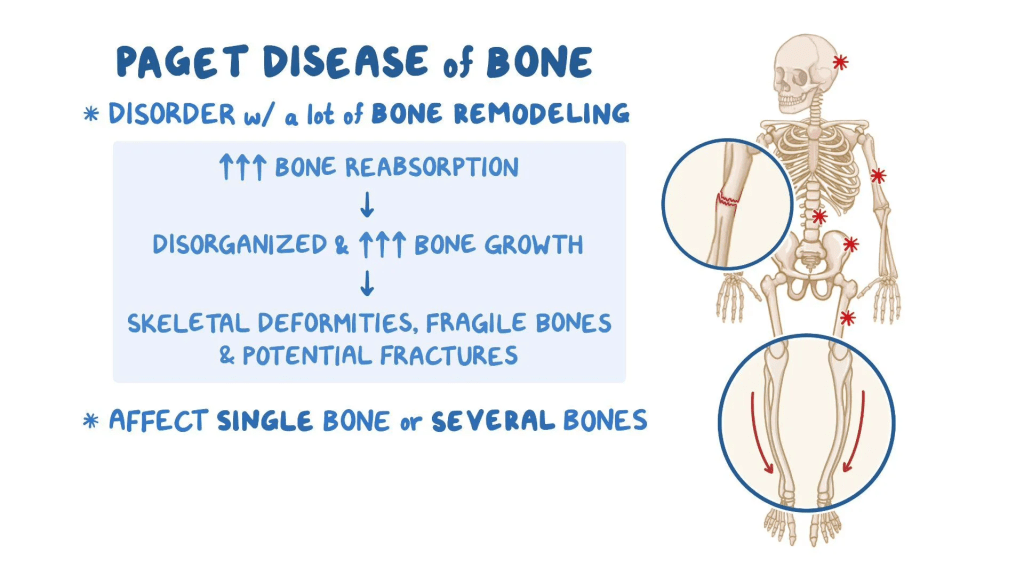
Paget’s disease of bone is a long-term condition that develops gradually and affects the skeleton. It involves unusually fast breakdown and rebuilding of bone. The new bone that forms is often dense but weak and structurally abnormal. This can lead to symptoms such as bone pain, joint problems, deformities and fractures. The disease most often affects bones in the spine, skull, pelvis and lower legs. The exact cause of Paget’s disease remains unknown.
Symptoms:
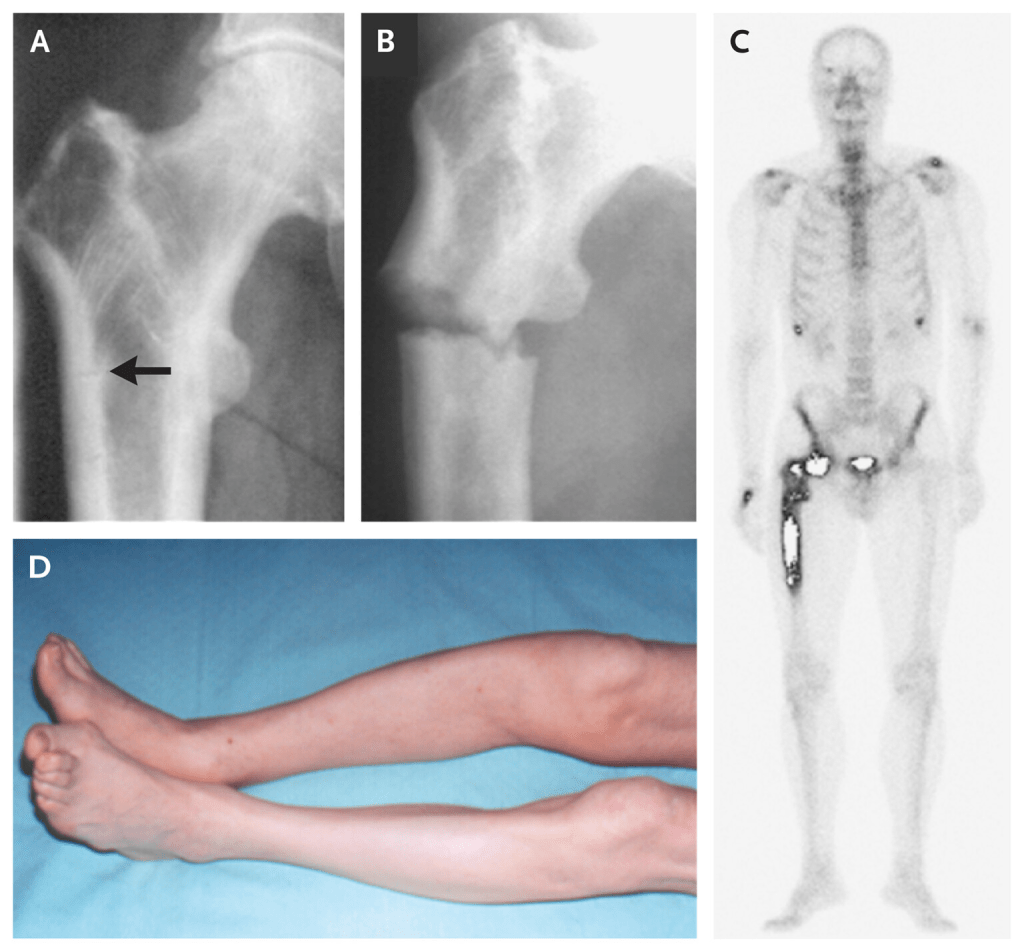
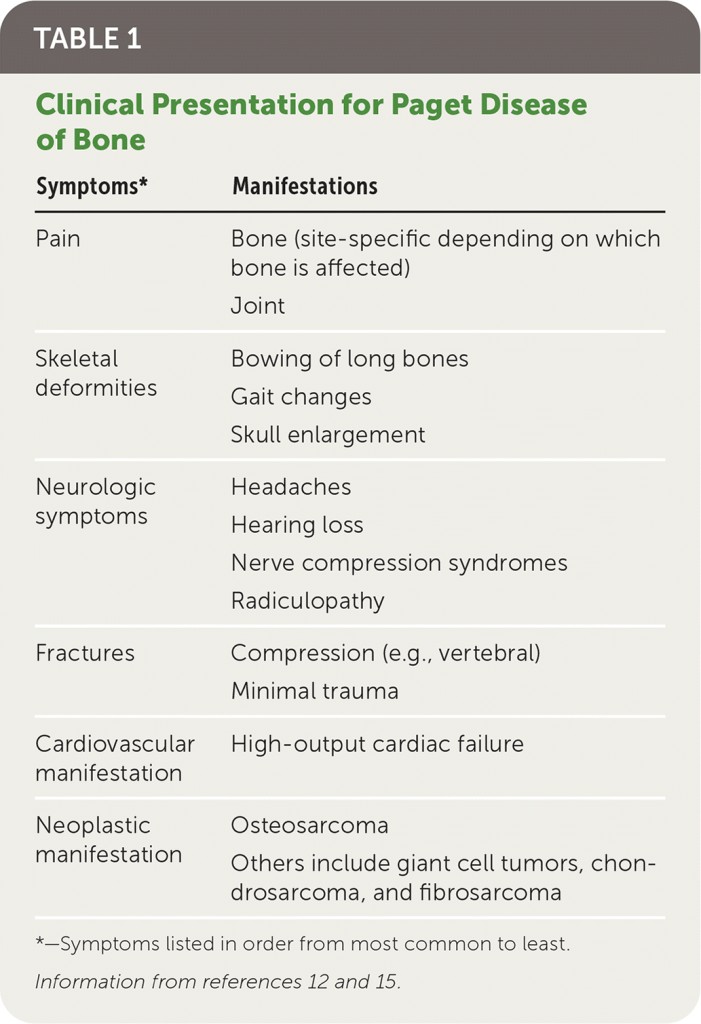
Early signs of Paget’s disease often include bone pain, joint pain in areas like the back, hips and knees, and headaches. Physical changes may involve thickening and bending of the thigh and lower leg bones, as well as an enlarged forehead due to skull growth. Many people with the disease do not show any symptoms or experience only mild discomfort.
As the condition advances, additional symptoms may develop. These can include increased bending of affected limbs, a waddling walk, joint inflammation, bone fractures and problems with muscles and sensation.
When the skull is involved, up to half of affected individuals may experience hearing loss. Other possible issues include vision problems and hydrocephalus, which is caused by too much cerebrospinal fluid building up in the skull and putting pressure on the brain.
In some cases, spinal stenosis can occur, which involves narrowing of the spinal canal or nerve pathways. A small number of people may also develop high-output heart failure. Bone tumors called sarcomas are a rare but serious complication.
Causes:
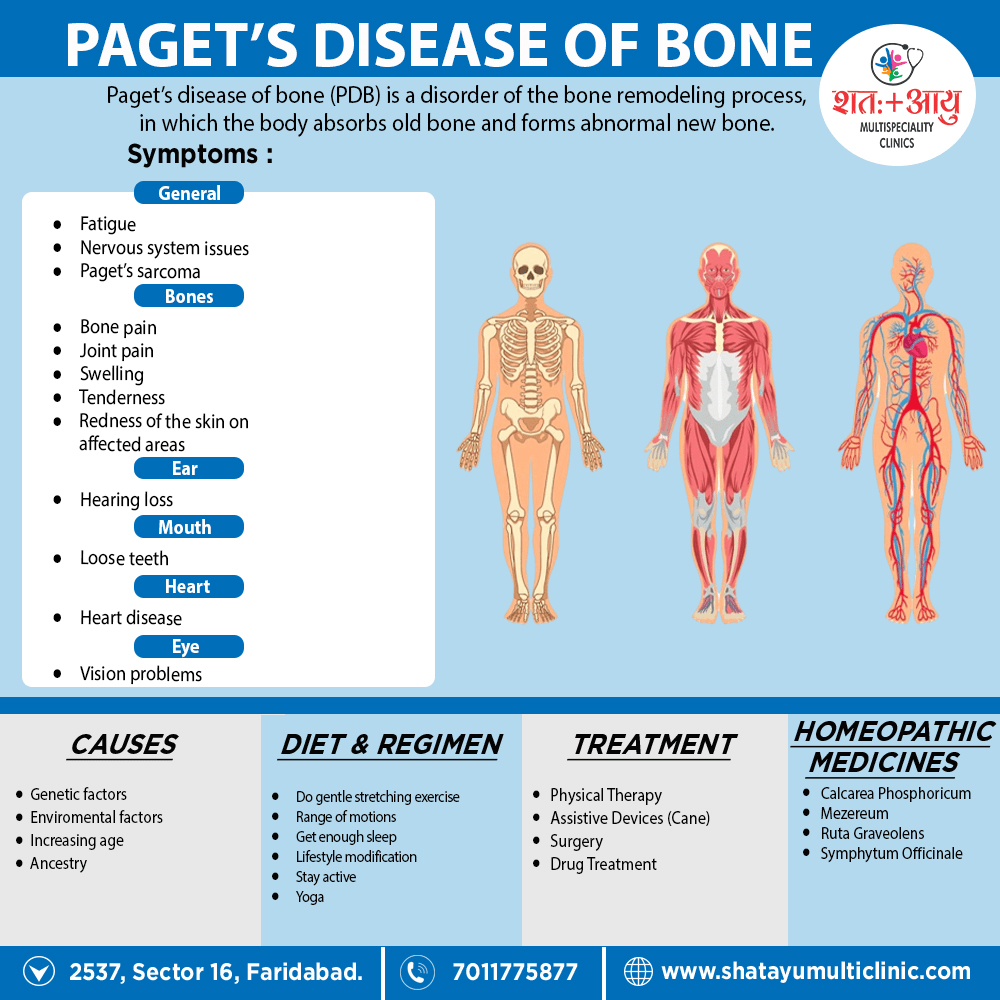
The exact cause of Paget’s disease is not known. Researchers believe it may result from a combination of genetic and environmental factors. In most cases, no clear cause can be found. Some evidence suggests the disease might be linked to a slow-acting viral infection in the bone that remains for many years before symptoms begin.
In about 15 to 30 percent of cases, there is a family history of the disease. Certain genes have been identified that may increase the risk of developing Paget’s disease. These include the sequestosome 1 gene, the TNFRSFIIA gene which produces the RANK protein, and the VCP gene. Although these genes are connected to the condition, their exact role is still unclear. This genetic link might help explain why some families may be more vulnerable to the possible viral trigger.
Diagnosis:
Paget’s disease is usually diagnosed through a detailed medical evaluation, including a review of the patient’s history and several specialized tests. Blood tests may show high levels of the enzyme alkaline phosphatase, which can suggest the presence of the disease. This is often confirmed with x-rays. A bone scan may be used to show how widespread the bone changes are. Urine tests, such as pyrilinks and osteomark, can also help with diagnosis and are sometimes used to monitor how well treatment is working.
Treatment:
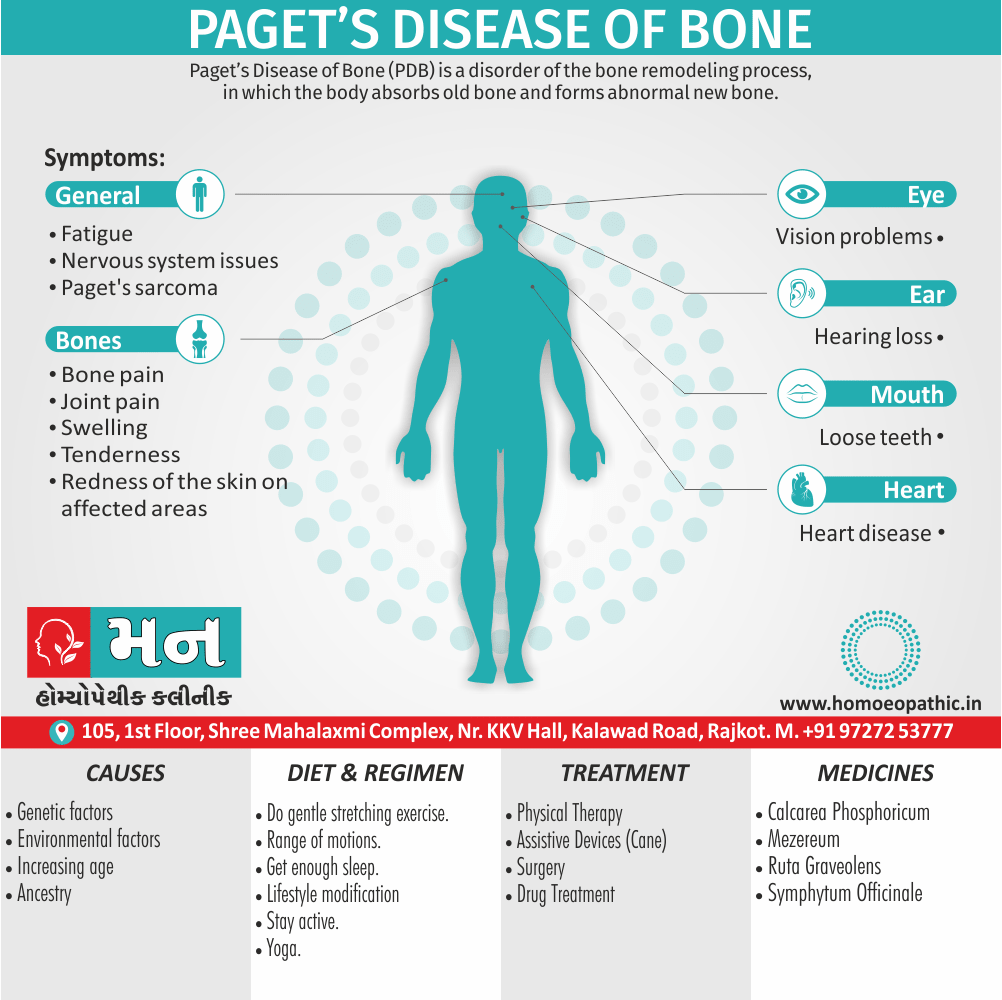
There are four main treatment approaches for managing Paget’s disease. These include physical therapy to improve muscle strength and help reduce certain types of pain, medications such as bisphosphonates or calcitonins, pain relief using drugs like acetaminophen or anti-inflammatory medications, and surgery in more serious cases.
Bisphosphonates are the main drugs used. They work by slowing down the breakdown of bone by interfering with the function of bone-resorbing cells called osteoclasts. Some may also encourage bone-building cells to produce substances that block osteoclast formation. There are six bisphosphonates approved in the United States for treating Paget’s disease. Among them, zoledronic acid and pamidronate disodium are given through a vein.
Calcitonin, specifically salmon calcitonin, was one of the first medications used. It can lower abnormal bone activity, ease bone pain, reduce heat over affected areas, improve certain nerve-related symptoms, and help heal damaged bone. However, it is now mostly used when patients cannot tolerate bisphosphonates. If calcitonin becomes ineffective, switching to a bisphosphonate is necessary. Miacalcin is the only form of calcitonin approved for this condition and must be injected. The nasal spray version of Miacalcin is not approved for Paget’s disease.
Pain caused by active disease often improves with treatments that target osteoclasts. If pain results from bone deformities, arthritis, or nerve problems, medications like acetaminophen, NSAIDs, or cox-2 inhibitors may also help alongside the main treatment.
Surgery may be needed in some cases. Common procedures include repairing fractures in affected bone, adjusting the alignment of the knee to reduce pain, and replacing joints such as the hip or knee when other treatments are not effective.
When surgery is needed, it is important to avoid full immobilization of the fractured area. Before any surgical procedure, patients should receive a strong bisphosphonate to lower bone blood flow and reduce the risk of heavy bleeding during the operation.
The introduction of bisphosphonates has significantly improved the management of Paget’s disease. Although the long-term effects of suppressing the disease are not fully known, the ability to restore normal bone activity offers hope for preventing future complications and improving quality of life.
How You Can Make an Impact:
Without proper research, funding, and support for continued studies and clinical trials to determine possible cures, legitimate medicines for the disease, or preventative treatment, many more people will go on to develop Paget’s Disease. If you can, please donate here! If you are unable to donate, consider volunteering your time by raising awareness for this rare disease. If you’re interested in learning more about Paget’s Disease, donation opportunities, or the progress being made on potential treatments, visit the Paget’s Association. The Paget’s Association is known for “supporting those affected by Paget’s disease, funding and encouraging research into the condition and raising awareness.”
Let’s keep spreading awareness! – Lily
References:
Altman, R. D. (2020, March 24). Paget’s Disease | Symptoms, Causes, Treatment | NORD. NORD (National Organization for Rare Disorders); NORD. https://rarediseases.org/rare-diseases/pagets-disease/
 Rare Disease Insights
Leave a comment