What is Pfeiffer Syndrome?:
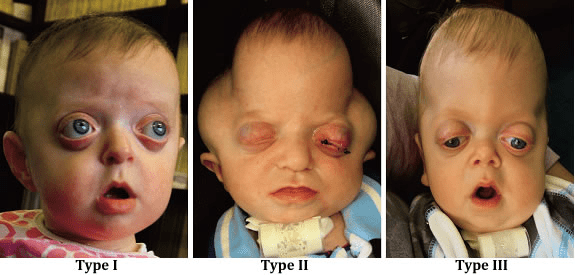
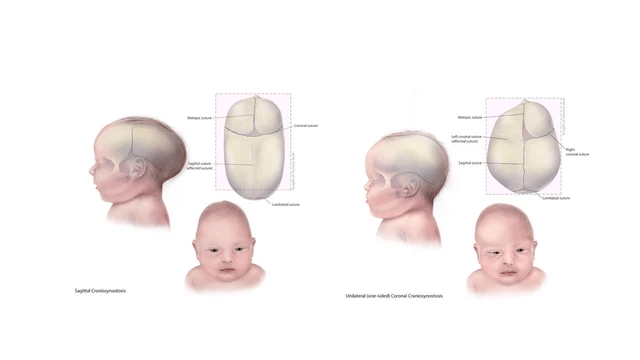
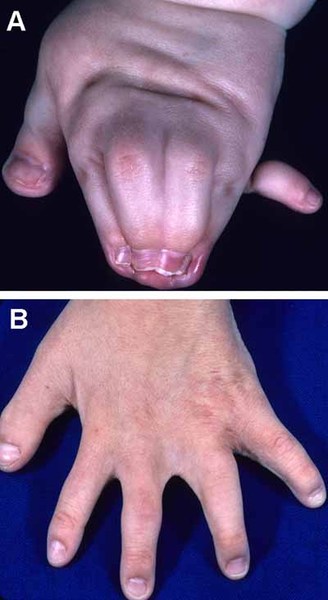
Pfeiffer syndrome is a rare inherited condition in which certain bones in a baby’s skull join together too early. People with this syndrome often have wide thumbs and big toes that angle toward the body. Many also have midface differences such as eyes that appear to bulge forward along with hearing problems caused by issues in the middle ear. There are three types of Pfeiffer syndrome and types two and three tend to be the most severe.
This condition follows an autosomal dominant pattern of inheritance and is linked to harmful changes in two genes known as FGFR2 and FGFR1. Pfeiffer syndrome belongs to a larger group of related conditions that result from changes in the FGFR genes. Other conditions in this group include Apert syndrome, Crouzon syndrome, Beare Stevenson syndrome, FGFR2 related isolated coronal synostosis, Jackson Weiss syndrome, Crouzon syndrome with acanthosis nigricans and Muenke syndrome.
Symptoms:
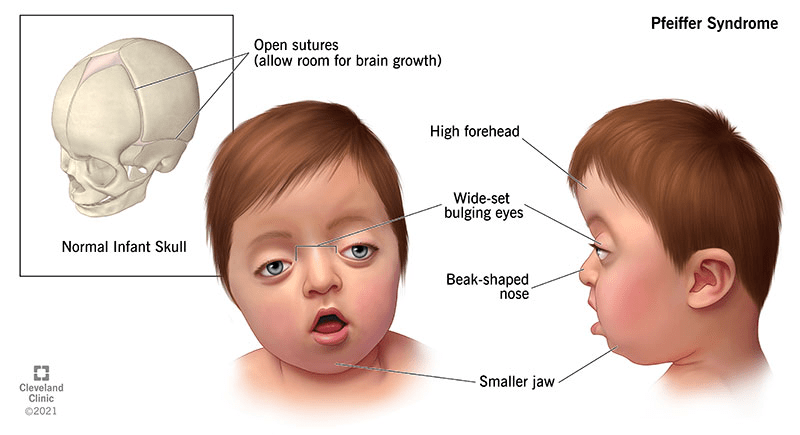
Infants with Pfeiffer syndrome type I typically have early skull-bone fusion that makes the head appear short and tall, along with a high rounded forehead, underdeveloped midface, wide-set eyes, and a small upper jaw. Dental issues are common. Most have normal intelligence, though many experience middle-ear–related hearing loss.
Type II is more severe and features a cloverleaf-shaped skull due to extensive early fusion. Children often have significant hand and foot abnormalities, hydrocephalus, and a very flat midface with prominent eyes, a beaked nose, and low-set ears. Spinal, joint, or internal-organ issues may occur. Developmental delays and neurological problems are common, often linked to brain pressure or breathing difficulties. Without timely treatment, infants face life-threatening complications, including severe sleep apnea and airway obstruction.
Type III resembles type II but lacks the cloverleaf skull. Additional signs can include a short skull base, teeth at birth, extreme eye bulging, and internal-organ abnormalities. As in type II, developmental delays, serious neurological issues, and early life-threatening complications are common without proper treatment.
Causes:
Pfeiffer syndrome type one is linked to changes in the FGFR1 and FGFR2 genes, while types two and three are linked only to changes in the FGFR2 gene. The condition follows an autosomal dominant inheritance pattern, meaning a person only needs one altered copy of the gene to develop the disorder. The altered gene can be passed down from either parent or can appear for the first time in a child because of a new mutation. Almost all cases of types two and three occur due to new mutations rather than inheritance. Having an older father increases the chance of these new mutations. A parent with Pfeiffer syndrome has a fifty percent chance of passing the altered gene to each child, and this chance is the same for males and females.
Diagnosis:
Pfeiffer syndrome is usually diagnosed by examining a person’s physical features. Genetic testing that looks for changes in the FGFR1 and FGFR2 genes can be used when the diagnosis is not clear.
Treatment:
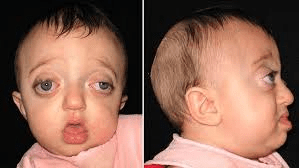
Treatment for Pfeiffer syndrome is tailored to each person’s symptoms and usually involves a team of specialists. Care often includes pediatricians, surgeons, ear nose and throat doctors, eye doctors, hearing specialists, and others who work together to create a coordinated plan.
Management focuses on relieving symptoms and providing support. Early surgery may be needed to correct skull fusion and to place a shunt if there is excess fluid around the brain. Facial differences such as an underdeveloped midface, nasal issues, or bulging eyes may also be treated with reconstructive surgery, which often improves breathing and eye problems.
Breathing issues can be serious in young children, and some may need a tracheostomy to keep the airway open. Hearing loss may be addressed with ear surgery or specialized hearing aids. Surgery can also help correct fused fingers or toes and other bone differences. Physical therapy and other supportive treatments can improve movement and function.
Early intervention services such as physical therapy, speech therapy, and social support help children reach their developmental potential. Genetic counseling is recommended for families, and relatives may benefit from careful evaluation to identify any related features.
How You Can Make an Impact:
Without proper research, funding, and support for continued studies and clinical trials to determine possible cures, legitimate medicines for the disease, or preventative treatment, many more children will go on to develop Pfeiffer Syndrome. If you can, please donate here! If you are unable to donate, consider volunteering your time by raising awareness for this rare disease. If you’re interested in learning more about Pfeiffer Syndrome, donation opportunities, or the progress being made on potential treatments, visit Born a Hero, Research Foundation. The Born a Hero, Research Foundation strives “to accelerate innovation and research to improve the quality of life for patients with FGFR Syndromes”
References:
Robin, N. H. (2023, July 25). Pfeiffer Syndrome – Symptoms, Causes, Treatment | NORD. NORD (National Organization for Rare Disorders); NORD. https://rarediseases.org/rare-diseases/pfeiffer-syndrome/
 Rare Disease Insights
Leave a comment