What is Spina Bifida (SB)?:
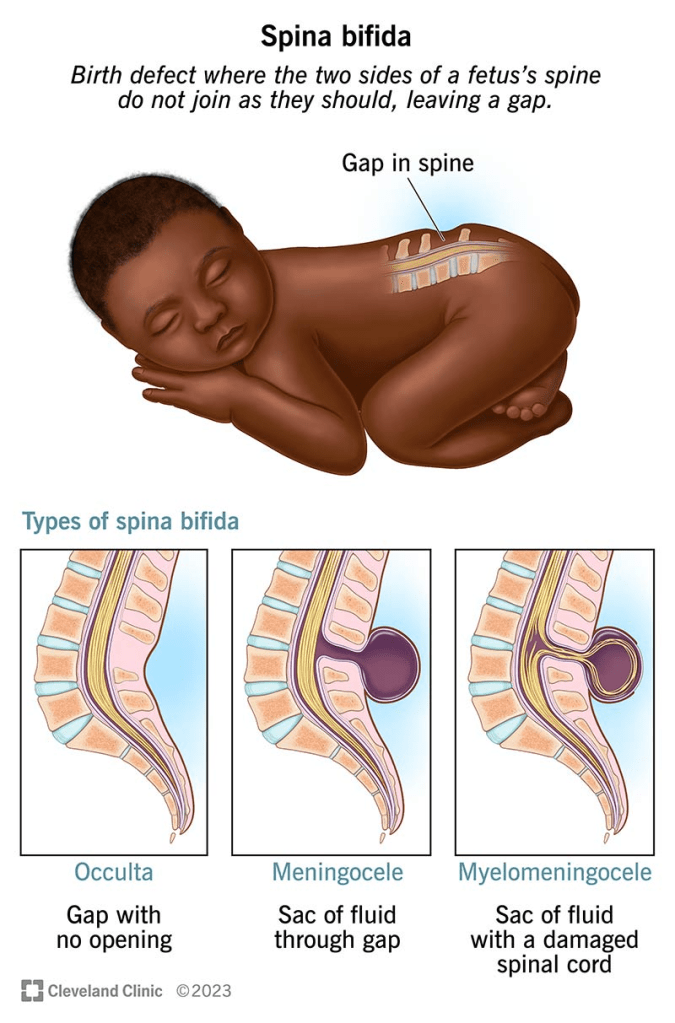
Spina bifida happens when some of the bones in the spine do not close completely, which leaves part of the spinal cord uncovered. Tissue from inside the spinal canal can bulge out through this opening. In the most serious type, called rachischisis, the opening is very large. Depending on how severe the condition is, spina bifida can lead to problems with bladder control, walking, or other bodily functions.
Symptoms:
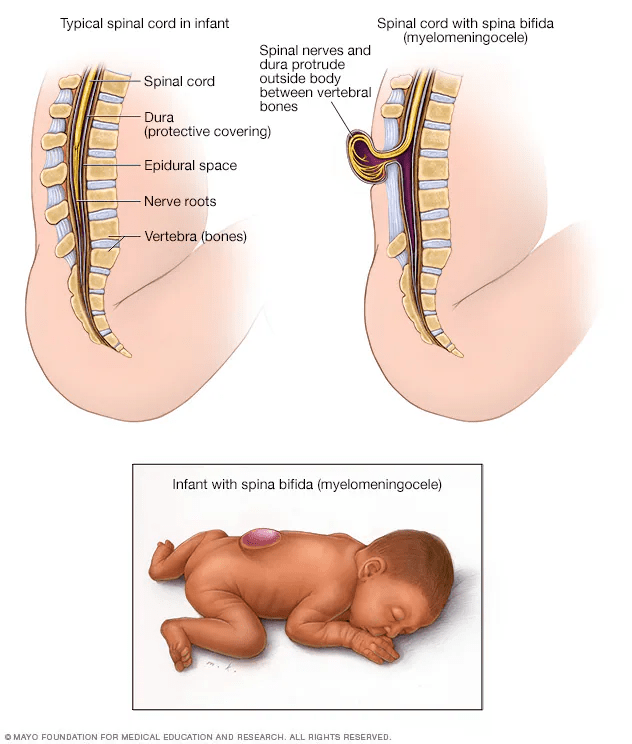
People with spina bifida can show many different symptoms depending on how large the opening in the spine is. The mildest type, called spina bifida occulta, usually causes little to no symptoms and may not be noticed at all. In this mild form, only a small part of the spine fails to close and it is usually found by chance on an X-ray. Sometimes a small dimple or a patch of hair on the back above the affected area hints at the condition. Problems with bladder control are common even in mild cases.
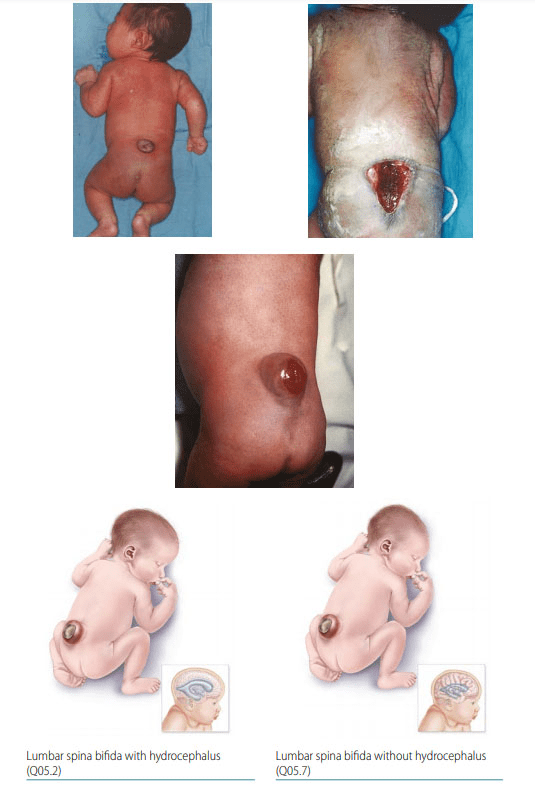
In more serious types, a pouch of tissue called a meningocele or a myelomeningocele can push out through the spinal opening. A meningocele involves the protective membrane that surrounds the brain and spinal cord. This pouch can be small or very large and may be covered with skin or leave nerve tissue exposed. It usually contains the fluid that surrounds the brain and spinal cord. A myelomeningocele is the most severe form and means that part of the spinal cord itself has pushed out into the pouch on the back.
Because the lower spinal cord is not formed correctly, the lower body can be affected in different ways. Mild cases may cause only some muscle weakness and reduced skin sensation. In people with a meningocele, extra fluid can build up in the brain, which can enlarge the head and possibly cause brain injury.
Although spina bifida is most often present at birth, it can occasionally be recognized for the first time during the teenage years. Rapid growth during this period can stretch the short nerves and lead to increasing weakness. Tests during pregnancy can look for spina bifida, but the results are not always completely reliable.
Causes:
The exact reason spina bifida develops is still unclear. It likely depends on a mix of genetic influences and conditions in the environment. Research shows that when a pregnant person does not get enough folic acid in their diet, the chances of spina bifida and other problems affecting the neural tube become higher.
Most babies with spina bifida or similar conditions are born to families that have never had these disorders before. Even so, if one child in a family has spina bifida, the parents have a higher chance of having another child with the same condition in the future.
Treatment:
The United States Public Health Service recommends that women who can become pregnant take four tenths of a milligram of folic acid each day through food or low dose supplements. They are advised not to take more than one milligram per day unless a doctor tells them to do so, since high amounts of folic acid can hide signs of other vitamin shortages.
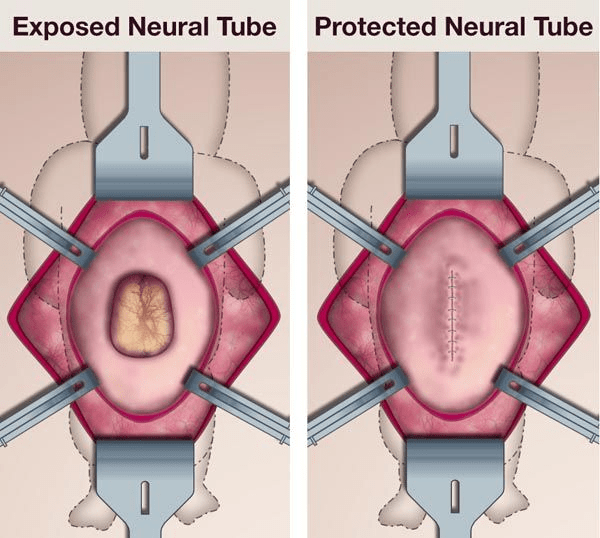
Very mild forms of spina bifida may not need any treatment. Moderate forms require a choice about whether surgery is a good option. In some cases, surgery can stop the condition from getting worse, although it cannot bring back lost function. In severe cases where the sac called a meningocele breaks or is close to breaking, surgery must be done right away.
A family doctor or an orthopedic specialist may recommend special shoes, braces, crutches, or other aids. These tools help the person use their weakened muscles as well as possible and keep the arms and legs from staying in unhealthy positions. Exercises that keep the joints moving through their full range can also be useful.
How You Can Make an Impact:
Without proper research, funding, and support for continued studies and clinical trials to determine possible cures, legitimate medicines for the disease, or preventative treatment, many more children will go on to develop Spina Bifida. If you can, please donate here! If you are unable to donate, consider volunteering your time by raising awareness for this rare disease. If you’re interested in learning more about Spina Bifida, donation opportunities, or the progress being made on potential treatments, visit the Spina Bifida Association. The Spina Bifida Association strives “to build a better and brighter future for all those impacted by Spina Bifida.”
References:
Spina Bifida – Symptoms, Causes, Treatment | NORD. (2007, September 23). NORD (National Organization for Rare Disorders). https://rarediseases.org/rare-diseases/spina-bifida/
 Rare Disease Insights
Leave a comment