What is Williams Syndrome?:
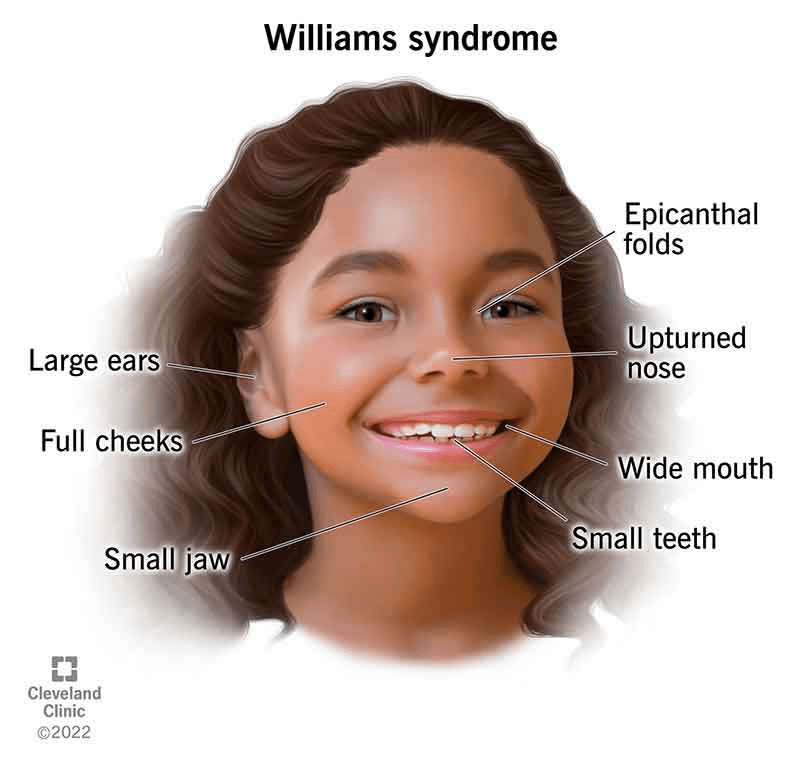
Williams syndrome is a rare genetic condition that affects growth, learning, and physical development. People with this condition often grow more slowly before and after birth, are shorter than average, and have mild to moderate intellectual disability. They usually have recognizable facial traits that become clearer with age, such as a round face, full cheeks, thick lips, a wide mouth that may stay open, and a broad nose with forward-facing nostrils. Other features can include small jaw size, short eye openings, arched eyebrows, prominent ears, and dental problems such as small or missing teeth with weak roots.
The condition is also linked to medical issues involving the heart, bones, and muscles. Common heart problems include narrowed blood vessels that affect blood flow from the heart to the lungs or to the rest of the body. Some infants have high calcium levels in the blood. Bone and muscle differences may include a sunken chest, curved spine, or an unusual walking pattern. Many individuals show strengths and challenges in behavior, including limited attention span, poor visual motor skills, and a very friendly, social, and talkative personality. Most cases happen by chance with no known cause, though it can sometimes run in families. Both spontaneous and inherited cases are caused by missing genetic material from a group of neighboring genes in a specific area of chromosome 7 called 7q11.23.
Symptoms:

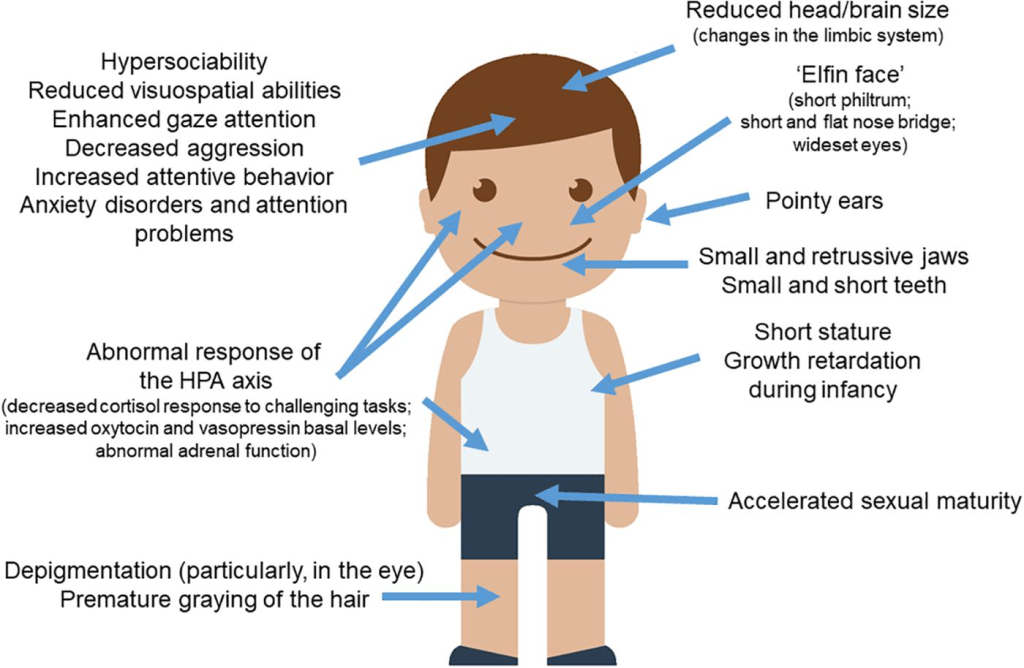
Williams syndrome affects people in many different ways, and symptoms can vary widely even within the same family. Not everyone has the same features, and the severity can differ from person to person. Common early signs include low birth weight, feeding problems, slow growth, digestive issues, and sometimes high calcium levels in infancy, which usually improve by about one year of age. Most individuals are shorter than average as adults. Characteristic facial features often appear at birth and may include a small head, full cheeks, a wide mouth, a broad nose, and other distinctive traits. Dental problems, vision issues, sensitivity to loud sounds, and frequent ear infections are also common.
Many children have delayed motor development and may enter puberty earlier than usual. About three-quarters of affected individuals have congenital heart defects, most often narrowing of the aorta, and high blood pressure is common in adulthood. Behaviorally, people with Williams syndrome are often very friendly and talkative, with attention difficulties and learning challenges, though some have strong language skills and good long-term memory. As individuals age, joint stiffness, spinal curvature, and other skeletal problems may develop and worsen over time. Some may also have kidney, thyroid, or urinary tract issues, as well as hernias.
Causes:
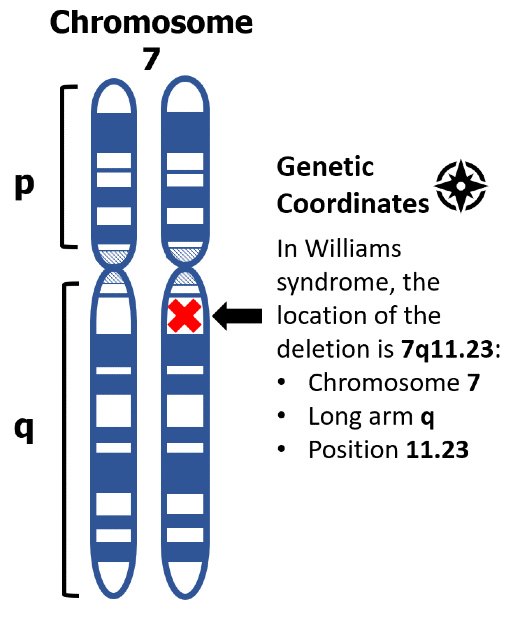
Most cases of Williams syndrome happen by chance, though it can sometimes run in families. Both sporadic and inherited cases are caused by missing genetic material from a specific area on chromosome 7 called 7q11.23, also known as the Williams-Beuren syndrome region. This deleted region contains several genes, including ELN, LIMK1, and RFC2, which are linked to the features of the condition. For example, LIMK1 is thought to contribute to visual and spatial learning difficulties. When Williams syndrome is inherited, it follows an autosomal dominant pattern, meaning an affected parent has a 50 percent chance of passing it on to each child. High calcium levels seen in some individuals may be related to increased sensitivity to vitamin D.
Diagnosis:
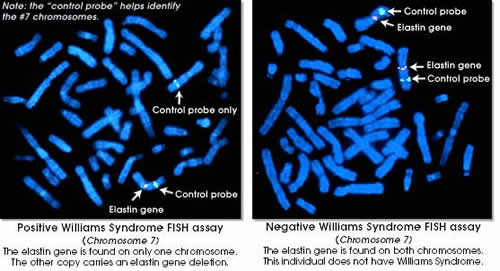
Williams syndrome is diagnosed through a detailed clinical evaluation that includes medical history and physical findings, along with blood tests to check for high calcium levels. A genetic test called FISH is often used to confirm the diagnosis by detecting a missing elastin gene on chromosome 7, which is present in most individuals with the condition.
Treatment:
Treatment for Williams syndrome focuses on managing symptoms and supporting development. Infants with high calcium levels may need limits on vitamin D and calcium intake, and in severe cases, may receive short-term steroid treatment. Calcium levels usually return to normal after the first year of life, and evaluation by an endocrinologist is recommended. Children with heart defects need careful evaluation by specialists, and some may require surgery. Developmental and educational support, along with therapies such as speech, occupational, and physical therapy, can help children reach their full potential. Genetic counseling is often helpful for families. Overall care is supportive and tailored to each individual.
How You Can Make an Impact:
Without proper research, funding, and support for continued studies and clinical trials to determine possible cures, legitimate medicines for the disease, or preventative treatment, many more people will go on to develop Williams Syndrome. If you can, please donate here! If you are unable to donate, consider volunteering your time by raising awareness for this rare disease. If you’re interested in learning more about Williams Syndrome, donation opportunities, or the progress being made on potential treatments, visit the Williams Syndrome Association. The Williams Syndrome Association strives advance the interests of all individuals with Williams syndrome throughout their lifespan by providing programming and resources, supporting research, promoting partnerships and connections, and ensuring that the infrastructure of the organization has the capacity to lead our community toward its goals.”
References:
NORD. (2008, May 1). Williams Syndrome – Symptoms, Causes, Treatment | NORD. NORD (National Organization for Rare Disorders); NORD. https://rarediseases.org/rare-diseases/williams-syndrome/
 Rare Disease Insights
Leave a comment