What is Situs Inversus?:
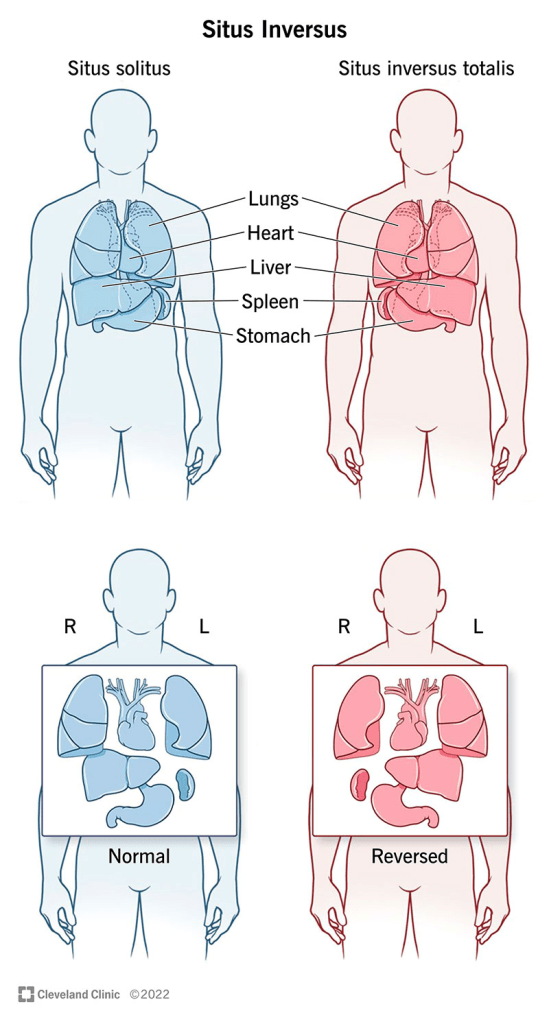
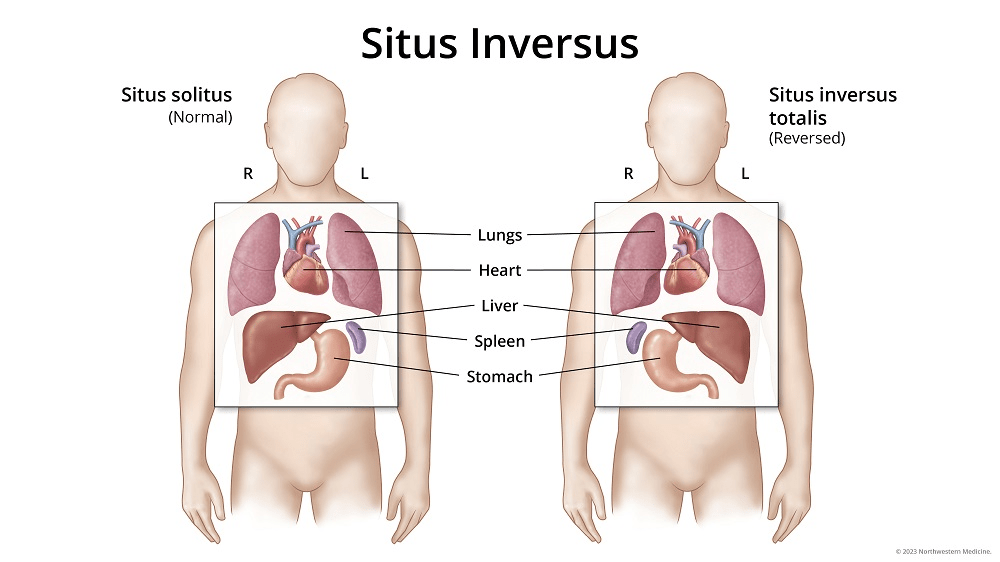
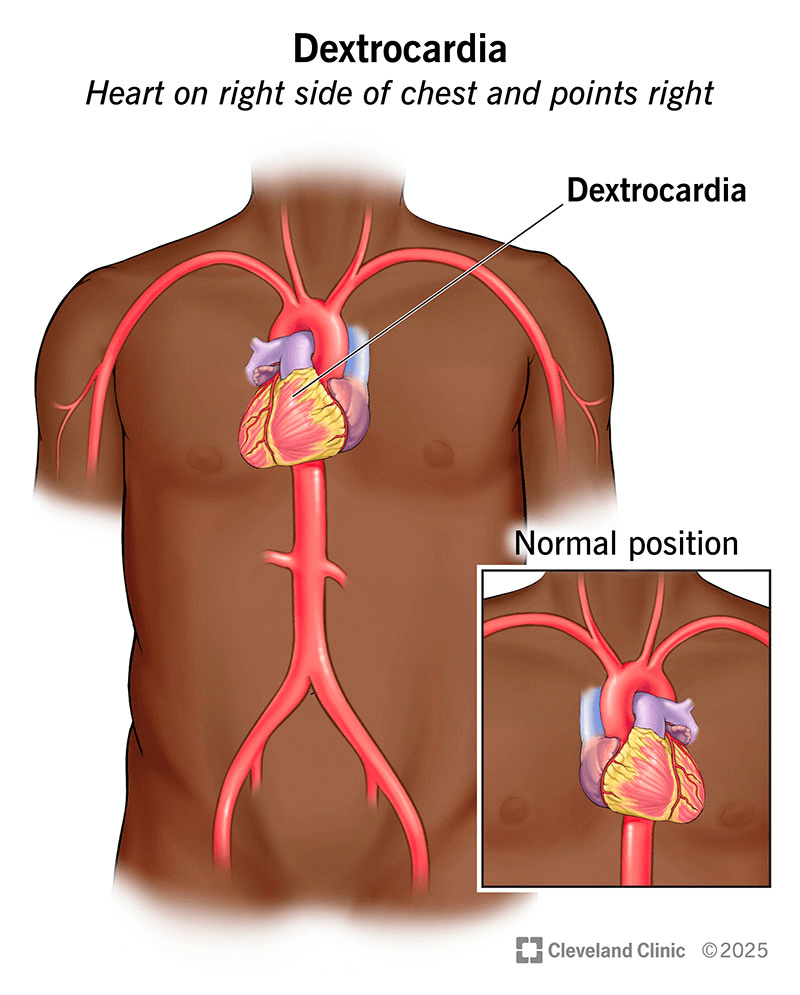
Dextrocardia with Situs Inversus is a rare condition present at birth in which the heart and major organs in the chest and abdomen are arranged as a mirror image of their usual positions. With Dextrocardia with Situs Inversus, the heart points to the right side of the chest instead of the left, and organs like the liver and spleen are also located on the opposite side of the body (as opposed to Situs Inversus, which means the heart isn’t necessarily in the reversed position). Even though people with Dextrocardia with Situs Inversus have different organ placement, most people with this condition have no symptoms and can live normal, healthy lives.
Symptoms/Diagnosis:
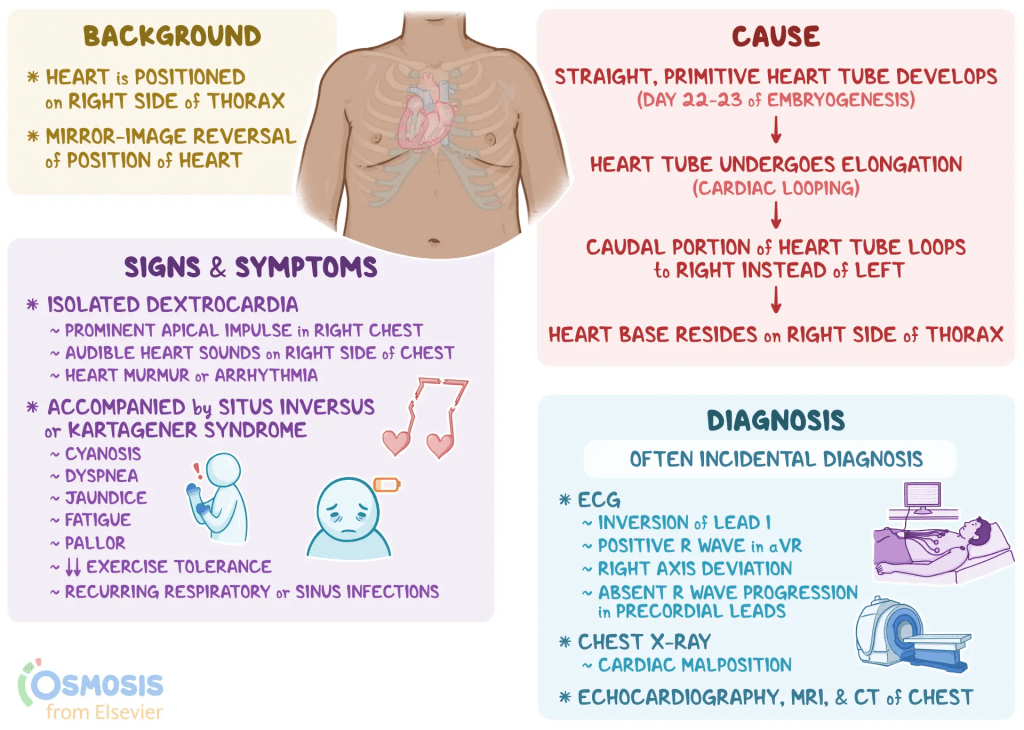
People with Dextrocardia with Situs Inversus normally only realize they have the condition after symptoms of heart issues arise. Electrocardiography will then show that the heart’s electrical signals appear reversed, and it is the preferred test for diagnosing this condition.
Causes:
Situs Inversus is inherited in an autosomal recessive pattern. During early development in the womb, the heart and other organs form in the opposite direction from normal, which causes them to be located on the reverse side of the body. In recessive conditions, a person only develops the disorder if they inherit the same altered gene from both parents. If someone inherits one normal gene and one altered gene, they become a carrier and usually do not have symptoms. When both parents are carriers, each pregnancy has a 25 percent chance that the child will have the condition, a 50 percent chance that the child will be a carrier without symptoms, and a 25 percent chance that the child will inherit two normal genes and not be affected.
Treatment:
Treatment is only necessary if someone with Dextrocardia with Situs Inversus has any of the associated heart problems, meaning treatment for Dextrocardia with Situs Inversus focuses on managing symptoms if and only if serious heart problems are present. Treatment and outlook would then depend on the specific condition. Genetic counseling can be useful for families to better understand inheritance and future risks.
How You Can Make an Impact:
Without proper research, funding, and support for continued studies and clinical trials to determine possible cures, legitimate medicines for the disorder, or preventative treatment, many more people will go on to develop Dextrocardia with Situs Inversus. Please consider volunteering your time by learning more about this rare disorder and raising awareness!
References:
NORD. (2007, August 8). Dextrocardia with Situs Inversus – Symptoms, Causes, Treatment | NORD. NORD (National Organization for Rare Disorders); NORD. https://rarediseases.org/rare-diseases/dextrocardia-with-situs-inversus/
NORD. (n.d.). Situs Inversus – National Organization for Rare Disorders. National Organization for Rare Disorders. Retrieved February 1, 2026, from https://rarediseases.org/mondo-disease/situs-inversus/
 Rare Disease Insights
Leave a comment