What is Eosinophilia-Myalgia Syndrome?:
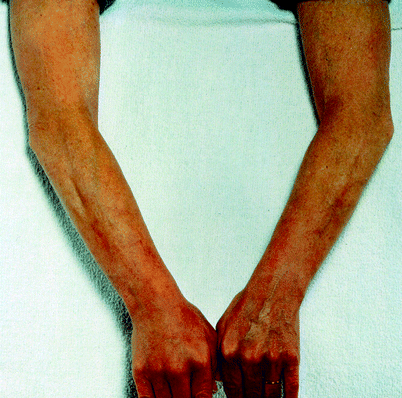
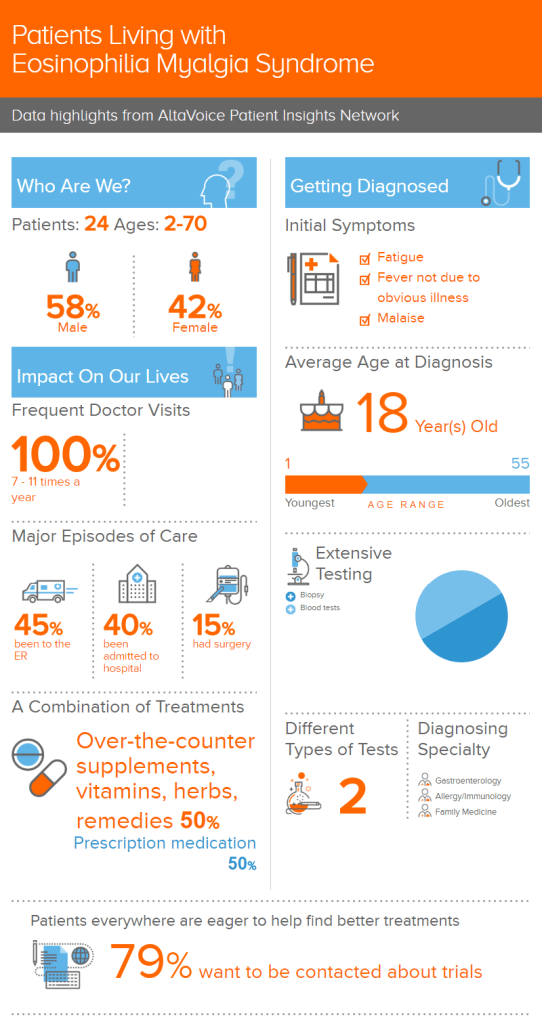
Eosinophilia-Myalgia Syndrome, or EMS, is a rare illness that can affect many parts of the body, especially the muscles, skin, and lungs. It often begins suddenly, and symptoms can differ from person to person. Common signs include severe muscle pain, muscle weakness, cramps, skin rashes, trouble breathing, and extreme tiredness. People with this condition have high levels of eosinophils, a type of white blood cell, in their blood and body tissues. In serious cases, EMS can lead to long-term disability or even death.
In the fall of 1989, an outbreak of EMS occurred in the United States. Doctors in New Mexico first noticed the illness in three women who all had severe muscle pain and high eosinophil levels. Each of them had taken manufactured L-tryptophan supplements before becoming sick. After local news reports, more cases were identified across the country and in other nations. Health departments in New Mexico and Minnesota quickly studied the outbreak and found a strong link between EMS and manufactured L-tryptophan supplements. The Centers for Disease Control and Prevention began a nationwide investigation. On November 11, 1989, the Food and Drug Administration warned people to stop taking these supplements and requested that they be removed from stores.
After the supplements were taken off the market, the number of new cases dropped quickly. However, more than 1,500 people became ill, and 37 died. Many were healthy adults who suffered severe nerve damage. Researchers believe that contaminated L-tryptophan supplements caused the outbreak, but the exact harmful substance has never been identified. In 1994, Congress passed the Dietary Supplement Health and Education Act, which reduced the FDA’s authority over dietary supplements. As a result, manufactured L-tryptophan is now legally sold again.
A small number of EMS cases occurred before the 1989 outbreak and have continued to appear since then. These cases have been linked to L-tryptophan or to 5-HTP supplements. When L-tryptophan was removed from the market, many people began using 5-HTP as an alternative. Both substances are involved in the body’s process of making serotonin, a chemical that helps control mood and sleep. Because of this, some people take L-tryptophan or 5-HTP in hopes of improving sleep or mood.
Symptoms:
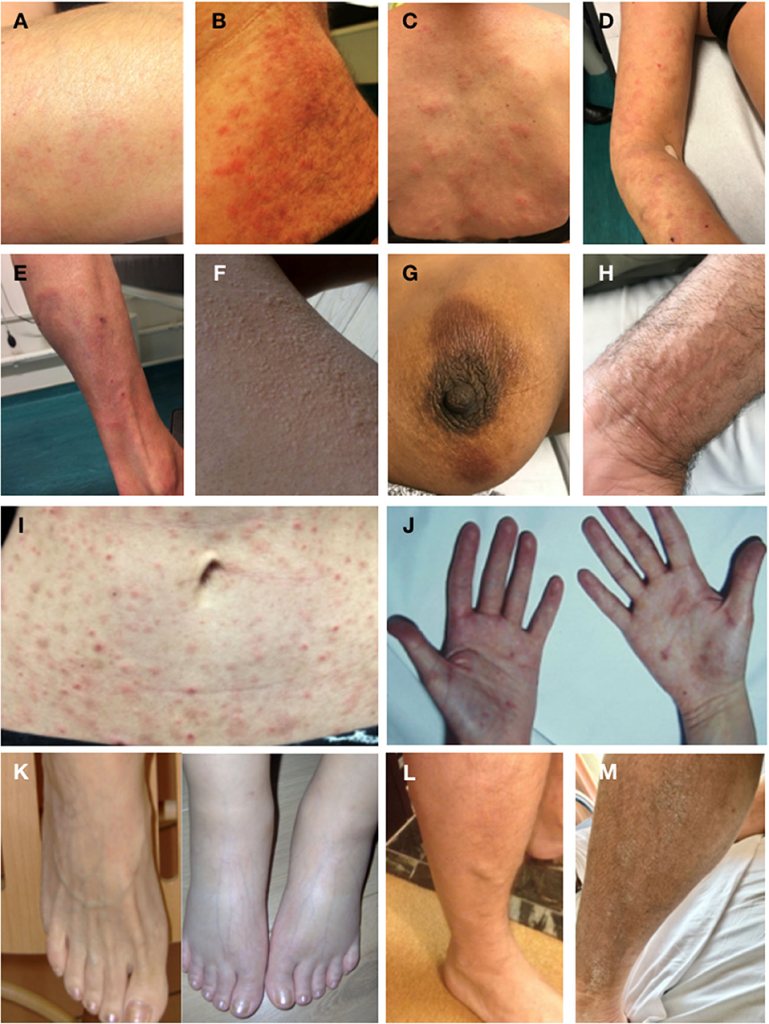
Eosinophilia-Myalgia Syndrome can look very different from person to person, and symptoms often begin suddenly. At the start, people usually have trouble breathing, such as shortness of breath, along with muscle aches, cramps, and spasms. Muscle pain can steadily get worse and may become so severe that walking or doing everyday tasks is difficult. The legs, back, and shoulders are most commonly affected. Spasms may be brought on by movement or exercise. Muscle weakness usually develops later.
Other early symptoms often include cough, fever, tiredness, joint pain, swelling from fluid buildup, and numbness or tingling in the hands, feet, arms, or legs. An extremely itchy rash may also appear. This early phase usually lasts about three to six months. After this period, long-term symptoms can develop and may affect different parts of the body. The skin is most often involved and can slowly swell, thicken, and harden, especially on the arms and legs. Some people may notice small patches of hair loss.
In some cases, the brain and nerves are affected. This can lead to reduced feeling in the hands, increased sensitivity in the back, arms, or legs, growing muscle weakness, bladder problems, mood or behavior changes, and thinking problems such as memory loss, trouble concentrating, or difficulty communicating. However, some experts believe that these thinking and behavior changes may be caused by severe pain, depression, and sleep problems rather than the disease itself.
Less common long-term problems can include heart issues such as inflammation of the heart muscle, irregular heartbeats, and a feeling of pounding or racing heartbeats. Some people may also have digestive problems like nausea, vomiting, diarrhea, and stomach pain. Muscle pain, which is the main symptom early on, often continues into the long-term phase but may come and go. Severe tiredness is also common, along with muscle cramps and shortness of breath.
Causes:
Nearly all cases of eosinophilia myalgia syndrome during the 1989 outbreak were linked to contaminated L-tryptophan made by the Japanese company Showa Denko K.K. However, the exact substance in the supplement that caused the illness has never been clearly identified. There were a few cases of the condition reported before the 1989 outbreak, and some have been reported since then. The earlier cases were connected to L-tryptophan supplements. More recent isolated cases have been linked to either L-tryptophan or 5-HTP supplements.
When L-tryptophan was removed from the market after the outbreak, 5-HTP became a common substitute and remains in use today. 5 HTP is a natural substance the body makes while converting L-tryptophan into serotonin, a brain chemical that helps control sleep, mood, and other functions. Because serotonin plays an important role in sleep and emotional balance, people take L-tryptophan or 5-HTP supplements in hopes of raising serotonin levels and improving sleep and mood.
Diagnosis:
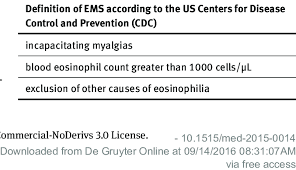
Eosinophilia-Myalgia Syndrome can appear in different ways and range from mild to severe. Early medical reports showed that most patients had very high levels of eosinophils in their blood along with severe muscle pain. Other common symptoms included joint pain, weakness or extreme tiredness, shortness of breath or cough, rash, headache, swelling in the arms or legs, fever, and unusual tingling sensations. Many patients also had elevated serum aldolase levels, which suggests muscle damage. About half showed abnormal liver test results.
The signs and tissue changes seen in this condition are similar to those of eosinophilic fasciitis, a disorder that causes painful swelling and hardening of the tissues under the skin, especially in the arms and legs. There is no single medical test that can clearly confirm this syndrome. Because many doctors are not very familiar with it, patients are sometimes diagnosed with other conditions that have similar symptoms, such as fibromyalgia, chronic fatigue syndrome, lupus, arthritis, fasciitis, or other autoimmune or muscle and nerve disorders. However, certain diagnostic guidelines have been developed to help identify the condition.
Treatment:

There are no officially approved, peer-reviewed treatment guidelines for Eosinophilia-Myalgia Syndrome. Because the condition can affect people in many different ways, treatment is based on each person’s specific symptoms. Doctors may prescribe muscle relaxants, pain relievers, or diuretics to help manage discomfort and swelling. High doses of corticosteroids can reduce inflammation, but most researchers believe that these drugs do not significantly shorten the illness or lessen how severe the symptoms become. During the early phase, people with severe muscle pain and cramps may need to avoid heavy physical activity, and some may need to be hospitalized. In the long-term phase, patients who stay as physically active as they can usually seem to have better outcomes than those who remain inactive.
References:
Gleich, G. (2017, June 26). Eosinophilia-Myalgia Syndrome – Symptoms, Causes, Treatment | NORD. NORD (National Organization for Rare Disorders). https://rarediseases.org/rare-diseases/eosinophilia-myalgia-syndrome/
 Rare Disease Insights

Leave a comment