What is Guillain-Barré Syndrome?:
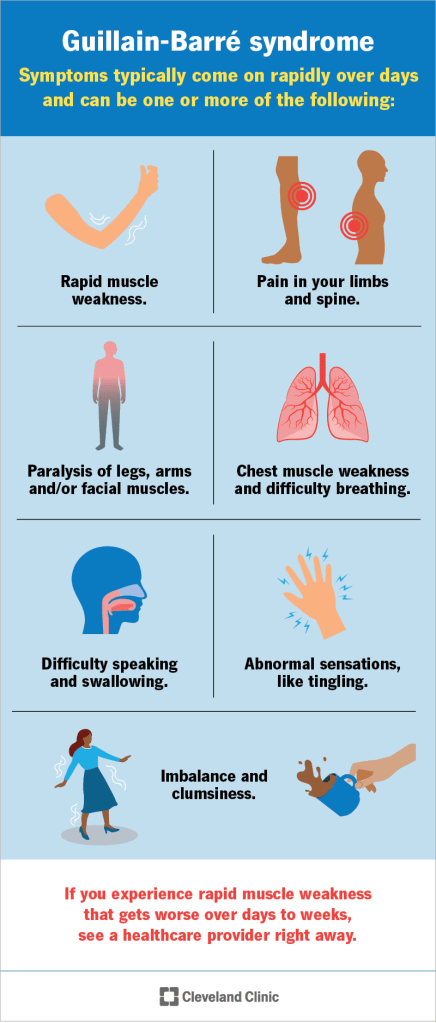
Guillain-Barré syndrome, or GBS, is a rare condition in which the body’s immune system attacks the nerves. This leads to muscle weakness that can worsen quickly and, in some cases, result in complete paralysis. It affects about one or two people out of every 100,000 each year. The exact cause is not fully understood. However, about half of those affected had a stomach or breathing infection a few days before symptoms began. Research suggests that the infection triggers an immune reaction that mistakenly damages the nerves, causing weakness and sometimes loss of feeling.
In milder cases, the immune system damages only the outer covering of the nerves, similar to the insulation around an electrical wire. This slows or blocks nerve signals, but people often recover fully within a few weeks. In more severe cases, the immune system damages the inner part of the nerves, similar to the metal wire inside a cable. Recovery takes longer in these cases, and some people may have lasting weakness.
Symptoms:
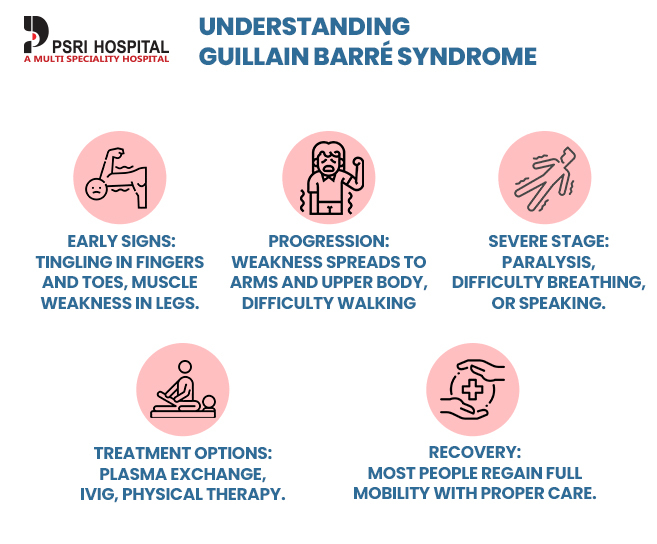
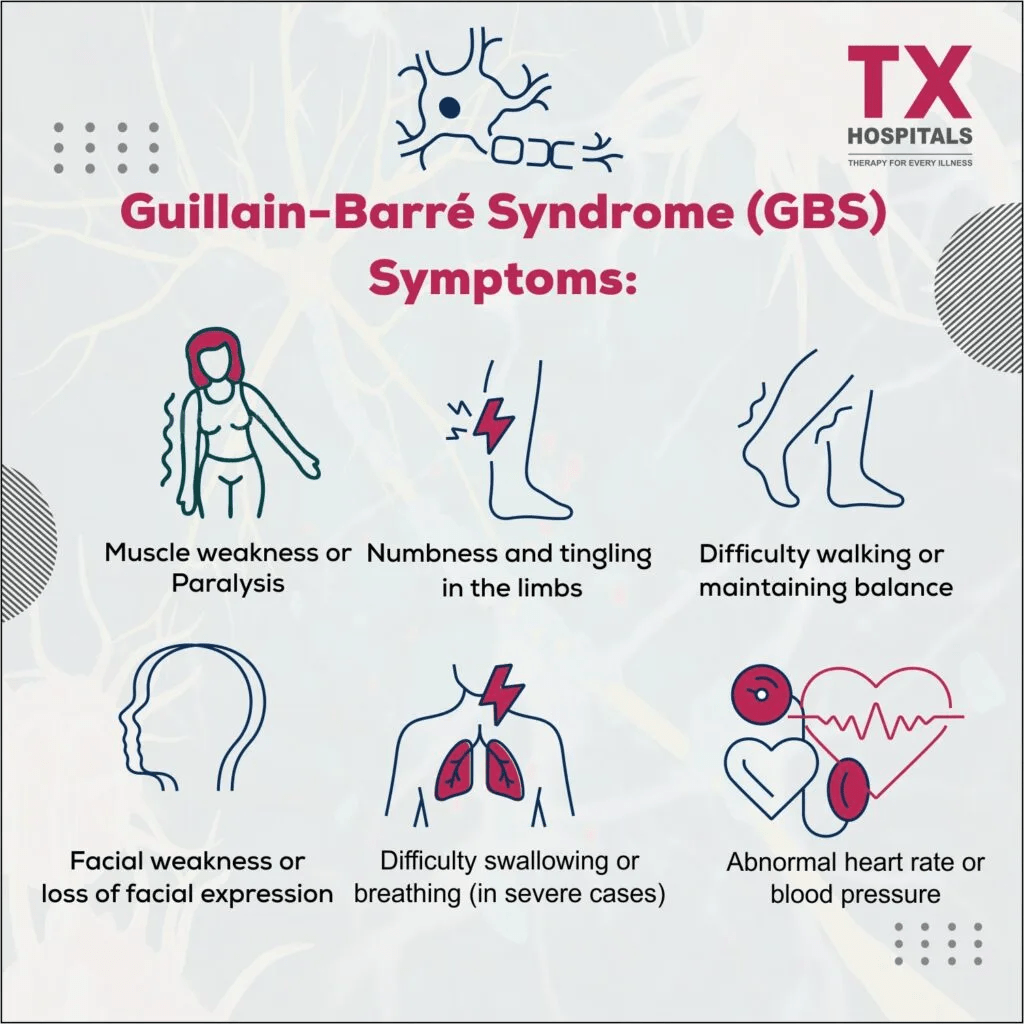
In Guillain-Barré syndrome, weakness usually starts in the legs and then spreads to the arms and upper body. It can also affect the face, throat, and muscles used for breathing. About one in four people with GBS develop such weak breathing muscles that they need a machine to help them breathe. Many people experience tingling, pins and needles, or numbness. These symptoms happen because the sensory nerves, which carry signals from the skin and joints, are damaged. The unusual sensations are often strongest in the hands and feet. Tingling can be painful, and muscles may ache. Symptoms usually worsen during the first two weeks, but they can progress in as little as one day or continue worsening for up to four weeks. Both sides of the body are usually affected in the same way.
Most people have symptoms mainly in their arms and legs. However, more severe cases can involve trouble swallowing, shortness of breath, and loss of bladder or bowel control. Heart rate and blood pressure may also become unstable, either too high or too low. With modern medical care, these complications can be managed. The severity of GBS varies widely. Some people have only mild weakness that does not affect their ability to walk and lasts just a few weeks. Others may become completely paralyzed, even losing the ability to move their eyes. Recovery often begins a few days to several weeks after symptoms reach their worst point, and improvement can continue for months. About 20 percent of people still have some level of disability after a year, such as needing support to walk. In those with severe weakness, slow recovery may continue for two years or longer.
Causes:
Guillain-Barré syndrome occurs when the body’s immune system causes inflammation in the peripheral nerves, which carry signals between the skin and muscles and the brain and spinal cord. Strong evidence shows that it is an autoimmune condition. After fighting off an infection, the immune system mistakenly attacks parts of the nerves. In most cases, it damages the outer covering of the nerve fibers, known as myelin, which helps nerve signals travel efficiently. In more severe cases, the damage also involves the inner part of the nerve, called the axon. In some individuals, the axon is the main target of the immune attack.
GBS is often triggered by infections. Bacterial causes include Campylobacter jejuni, which can lead to diarrhea often linked to undercooked chicken, and Haemophilus influenzae, which can cause chest infections. Viral triggers include cytomegalovirus, Epstein-Barr virus, hepatitis E, Zika virus, and SARS-CoV-2, the virus responsible for COVID-19. Although GBS has been reported after COVID-19 infection, it may sometimes be coincidental. Overall, fewer than one in one thousand people who develop these infections go on to develop GBS. In rare cases, GBS has also been linked to vaccination. A small increased risk has been reported with certain adenovirus-based SARS-CoV-2 vaccines, estimated at about six cases per million doses, while current mRNA COVID-19 vaccines have not shown this increased risk.
Diagnosis:
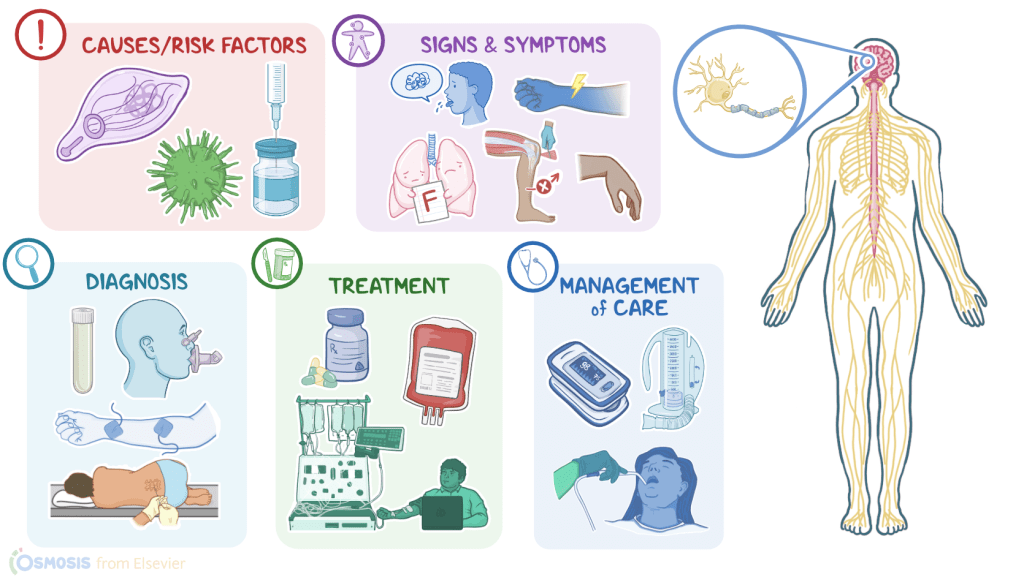
Guillain-Barré syndrome is just one of many possible causes of sudden weakness and numbness. Doctors diagnose it by recognizing its typical pattern of symptoms and physical signs. Because the condition is rare, it can be difficult for non-specialists to identify, and patients are often referred to a neurologist. On examination, doctors usually find reduced or absent tendon reflexes, which supports the diagnosis of a peripheral nerve disorder.
Two main tests help confirm the diagnosis. One is a lumbar puncture, which examines the cerebrospinal fluid that surrounds the spinal cord and nerve roots. During this procedure, the patient lies on their side while a small area in the lower back is numbed with local anesthetic. A thin needle is inserted into the lower spine to collect a small sample of fluid. In Guillain-Barré syndrome, the fluid typically shows a higher-than-normal protein level with a normal cell count.
The second common test is nerve conduction studies, often referred to as an EMG. In this test, small electrical impulses are applied to nerves in the arms and legs, and the responses are recorded from muscles and sensory nerves. The results confirm nerve damage and show whether it mainly affects the myelin covering, the inner nerve fibers called axons, or both. Additional tests may be done to rule out other causes of nerve damage, such as alcohol use, toxins, certain medications, blood vessel inflammation, vitamin deficiencies, or cancer. These may include blood tests and imaging studies, like X-rays or scans.
Treatment:
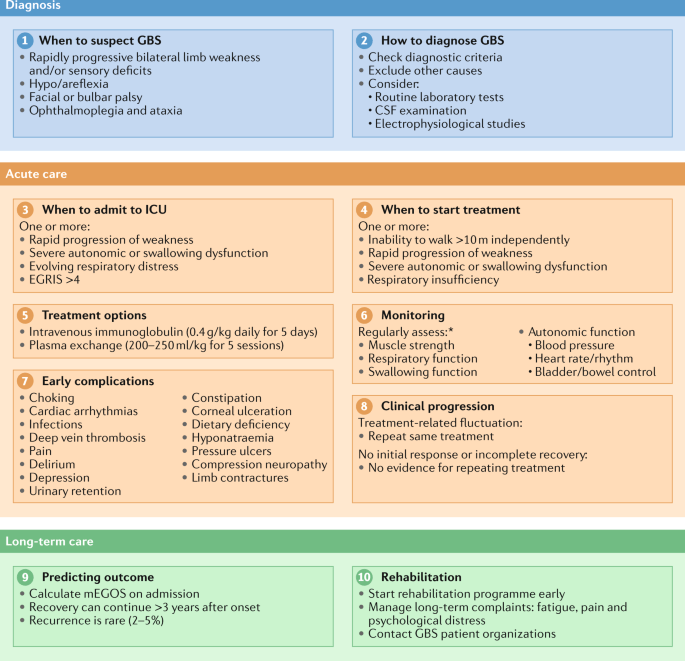
The most important parts of treatment for Guillain-Barré syndrome are careful medical and nursing care, physical therapy, and rehabilitation. In the early stages, people with severe illness must be closely monitored because breathing problems and unstable heart rate can occur. If breathing becomes too weak, a machine may be needed to help the person breathe in an intensive care unit. A tube is placed through the mouth or nose into the windpipe to connect to the breathing machine. If this support is needed for more than a few days, a small opening in the windpipe, called a tracheostomy, can be made, which is more comfortable. Once recovery occurs, the tube is removed, and the opening heals over time. If swallowing is difficult, a thin tube can be passed through the nose into the stomach to provide food and fluids. Medications and nursing care help control pain and prevent complications such as blood clots, bed sores, and constipation. Physical therapy maintains muscle strength and flexibility and prevents joint stiffness. When patients are medically stable, they often continue recovery in a rehabilitation center with physical and occupational therapy. Emotional and psychological support is also important throughout the illness.
Two specific treatments can speed up recovery. One is plasma exchange, also known as plasmapheresis. In this procedure, blood is removed through a vein and passed through a machine that separates and removes the plasma, which contains harmful antibodies. The red blood cells are then returned to the body with a replacement fluid. The second treatment is intravenous immune globulin, or IVIG, which involves giving high doses of purified antibodies collected from healthy donors through a vein. IVIG likely works by blocking the harmful antibodies that cause nerve damage. IVIG is easier to give and more widely available than plasma exchange, but both treatments are equally effective. Using both together does not improve results. Treatment is most effective when started within the first two weeks of symptoms. No other therapies have been shown to speed recovery, and steroids have not been helpful in clinical studies.
The outlook for most people with Guillain-Barré syndrome is good. Many recover fully or nearly fully. Some may have lasting mild problems, such as weakness in the foot or unusual sensations in the hands and feet that can last for years. Ongoing fatigue and pain can also occur. Fewer than 15 percent of patients have significant long-term disability requiring a cane, walker, or wheelchair. Death is uncommon and occurs in fewer than 5 percent of cases, mainly where advanced intensive care is not available. Recurrence of the condition is rare.
How You Can Make an Impact:
Without proper research, funding, and support for continued studies and clinical trials to determine possible cures, legitimate medicines for the disease, or preventative treatment, many more people will go on to develop Guillain-Barré Syndrome. If you can, please donate here! If you are unable to donate, consider volunteering your time by raising awareness for this rare disease. If you’re interested in learning more about GBS, donation opportunities, or the progress being made on potential treatments, visit GBSCIDP Foundation International. GBSCIDP Foundation International’s mission is to “improve the quality of life for individuals and families affected by GBS, CIDP, MMN, and related conditions.”
Let’s keep spreading awareness! – Lily
References:
Hughes, R. (2024, May 6). Guillain-Barré Syndrome – Symptoms, Causes, Treatment | NORD. National Organization for Rare Disorders. https://rarediseases.org/rare-diseases/guillain-barre-syndrome/#
 Rare Disease Insights
Leave a comment