What is Charcot-Marie-Tooth Disease?:
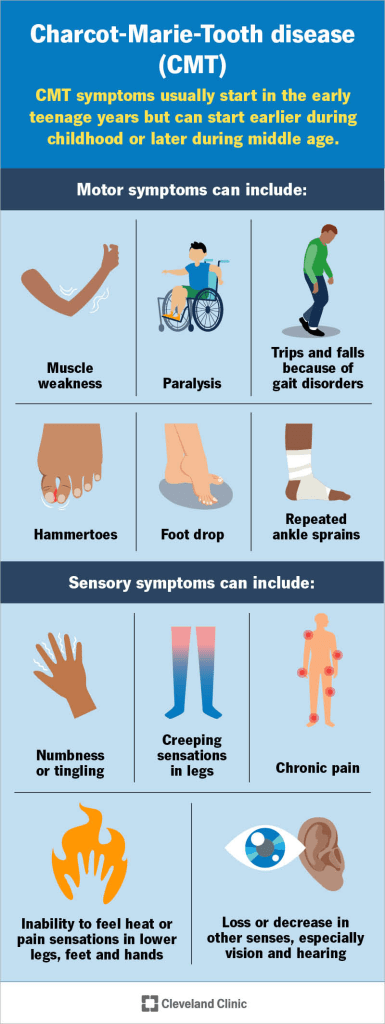
Charcot-Marie-Tooth (CMT) disease is a group of inherited genetic disorders that cause peripheral nerve damage, leading to muscle weakness, atrophy, and sensory loss. It disrupts electrical signaling by damaging axons or their myelin insulation, causing symptoms that typically start in the feet and legs before progressing to the hands.
Symptoms:
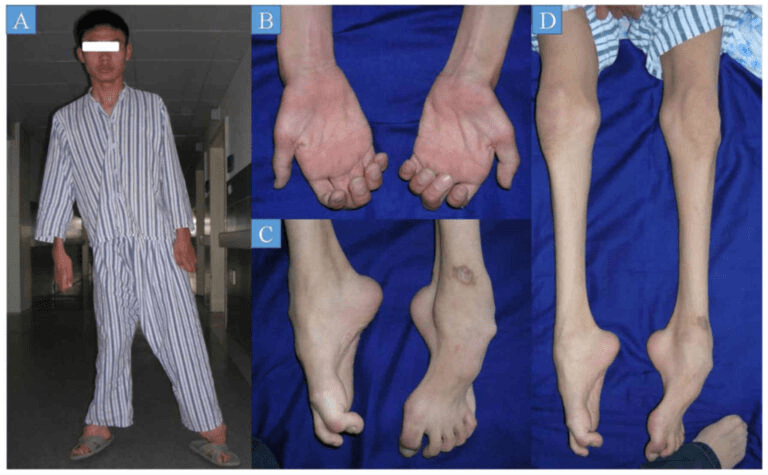
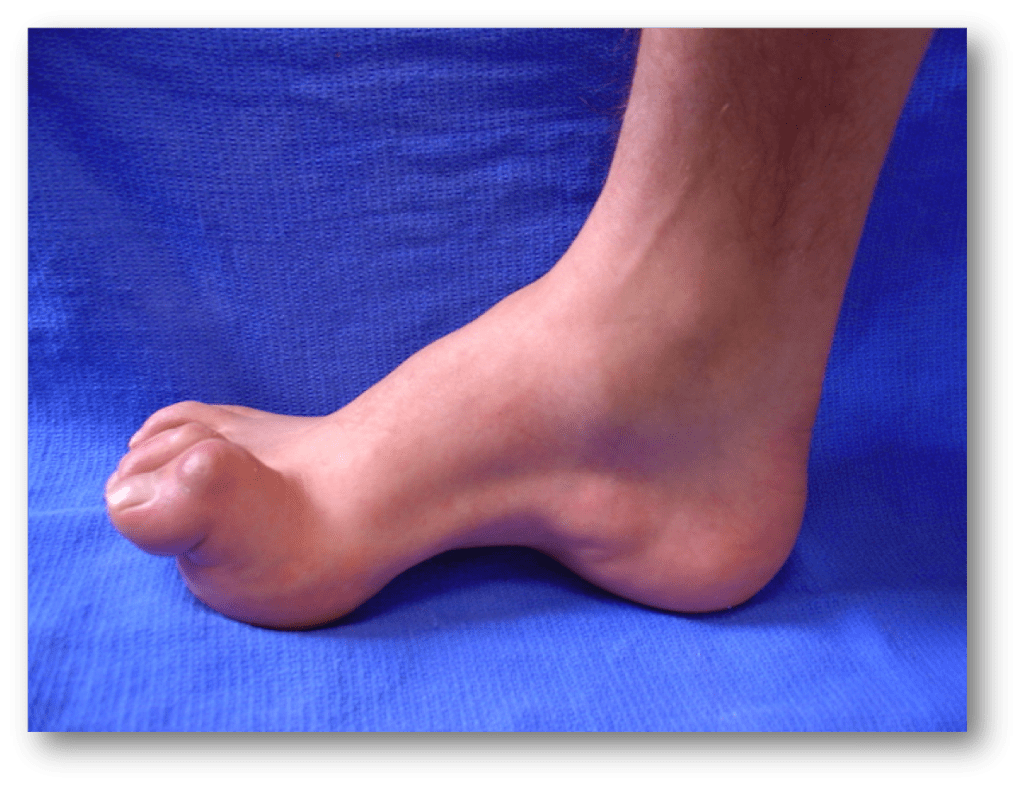
CMT leads to reduced sensation and muscle loss in the extremities. Early signs include foot drop, high arches, hammertoes, fine motor skill difficulties, and a tendency to trip or fall. While the condition varies greatly, allowing many to maintain a normal lifespan and active lifestyle, severe cases can lead to dangerous breathing complications.
Causes:
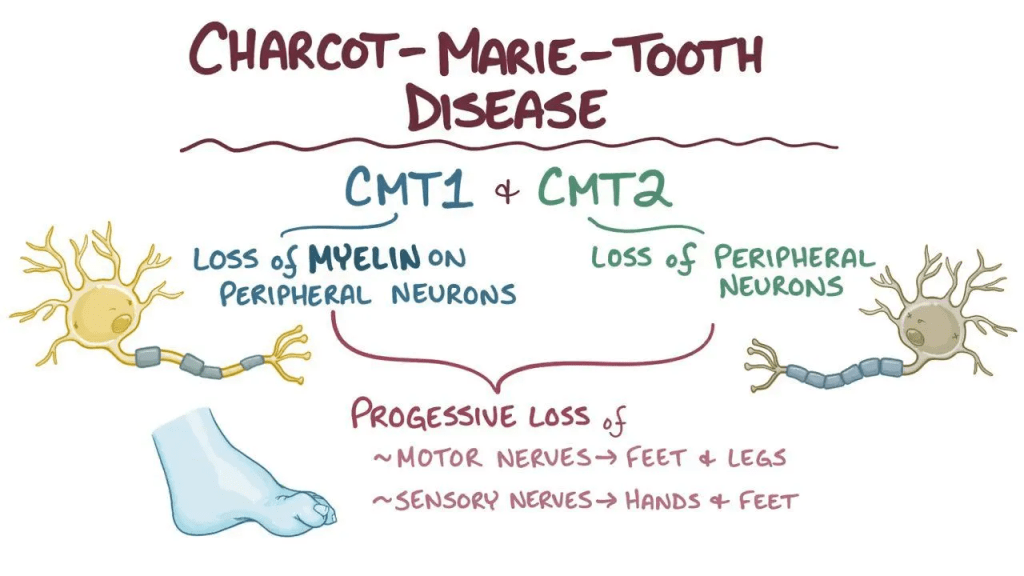
Charcot-Marie-Tooth disease is caused by inherited or spontaneous genetic mutations that alter the proteins necessary for normal peripheral nerve function. These mutations primarily affect either the axons responsible for signal transmission or the protective myelin sheath that insulates them. When this damage occurs, electrical signals between the brain and the extremities are weakened or slowed, leading to progressive muscle weakness, atrophy, and loss of sensation, most commonly in the arms and legs.
Diagnosis:
Diagnosing CMT relies on evaluating physical symptoms, family history, and clinical tests, such as nerve conduction velocities and electromyograms. Furthermore, molecular genetic testing now identifies a genetic cause in roughly 60% of cases overall, with just four genes accounting for the vast majority of these diagnoses.
Treatment:
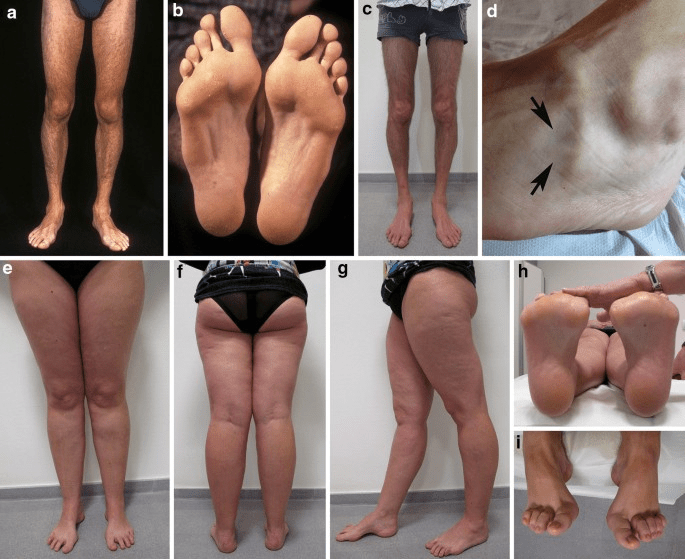
Because CMT has no cure, management focuses on supportive care to minimize symptoms and maximize independence. Comprehensive physical therapy, orthotics, and corrective surgeries help maintain mobility, while complementary therapies boost overall well-being. Additionally, vocational and genetic counseling assist young patients with future planning and understanding inheritance risks.
How You Can Make an Impact:
Without proper research, funding, and support for continued studies and clinical trials to determine possible cures, legitimate medicines for the disease, or preventative treatment, many more people will go on to develop CMT. If you can, please donate here! If you are unable to donate, consider volunteering your time to raise awareness about this rare disease. If you’re interested in learning more about CMT, donation opportunities, or the progress being made on potential treatments, visit the Charcot-Marie-Tooth Association.
References:
Worthington, M., & Campion, M. (2021, October 5). Charcot-Marie-Tooth Disease – Symptoms, Causes, Treatment | NORD. NORD (National Organization for Rare Disorders); NORD. https://rarediseases.org/rare-diseases/charcot-marie-tooth-disease/
 Rare Disease Insights
Leave a comment