What is Waardenburg Syndrome?:
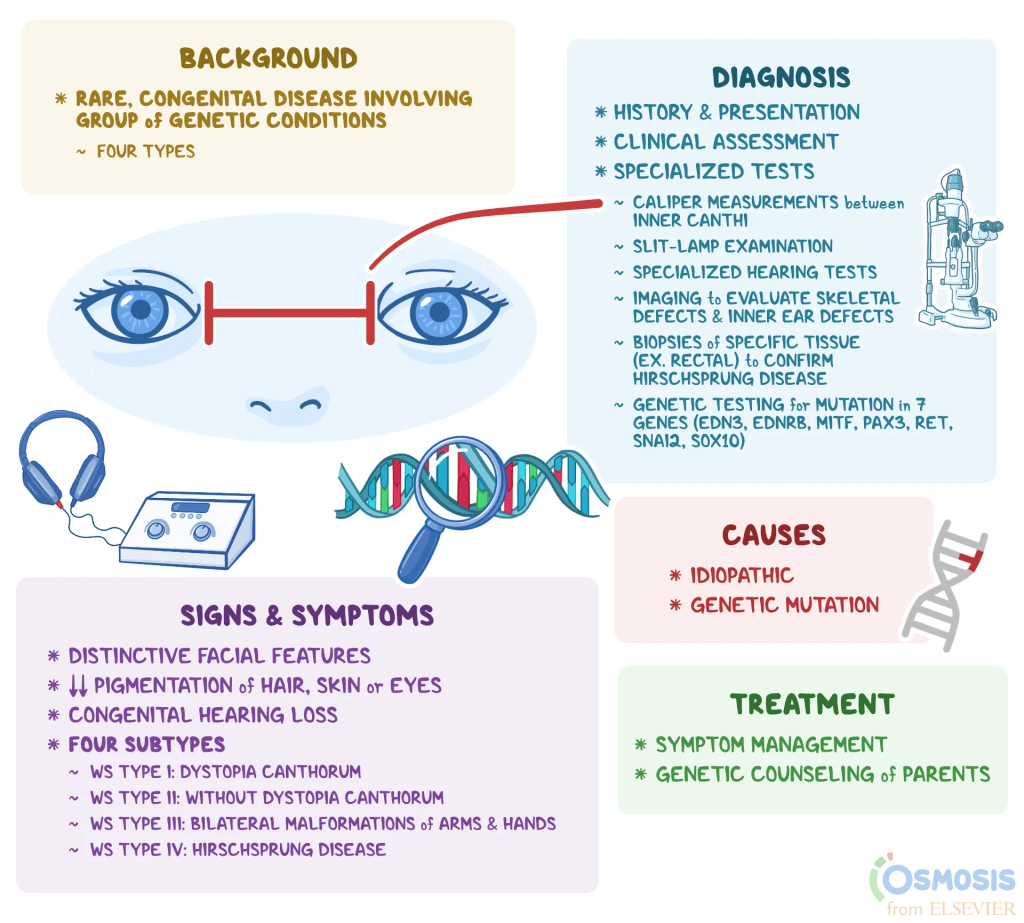
Waardenburg syndrome is a group of congenital genetic conditions characterized by distinct pigmentation changes in the hair, skin, and eyes, and varying degrees of hearing loss. Typically inherited in an autosomal dominant pattern, the syndrome does not have a cure. Treatment is individualized and focused on symptom management, such as using hearing aids for deafness or managing specific limb and digestive issues.
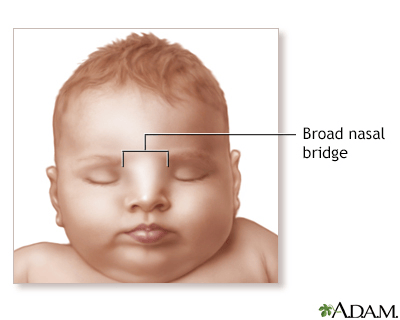
Clinically, the disorder is classified into four primary types with overlapping but distinct traits. Common features include a white patch of hair on the forehead, a white forelock, pale or differently colored eyes, and patches of light skin. Some types also present with distinctive facial features, such as a widened nasal bridge caused by outwardly displaced eyelids.
While pigmentation and hearing anomalies are universal to most types, the rarer variations of the syndrome come with additional complications. Specifically, type three may include musculoskeletal anomalies of the arms and hands. Type four involves gastrointestinal complications known as Hirschsprung disease, which affects the large intestine.
Symptoms:
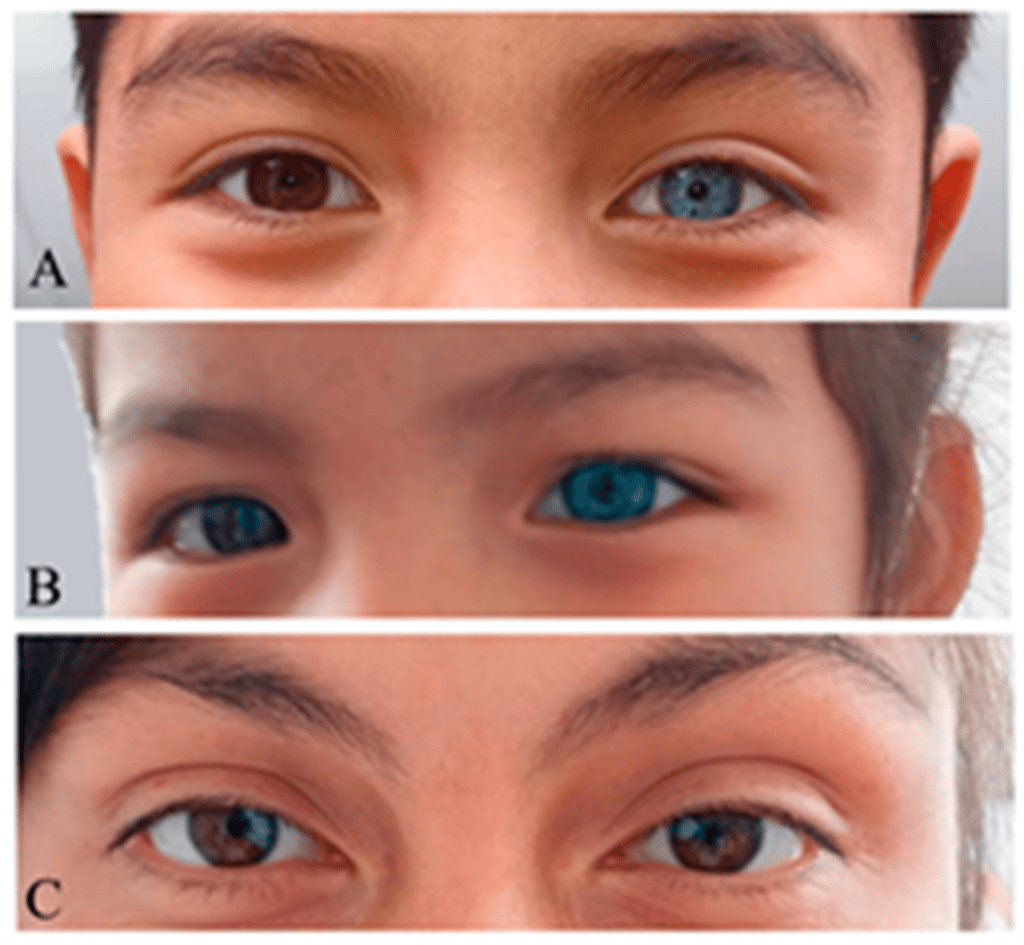
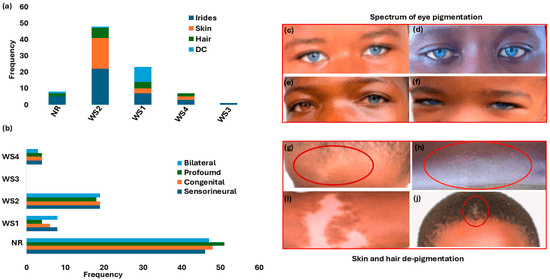
Common features across all types of Waardenburg syndrome generally include permanent sensorineural hearing loss and reduced pigmentation, affecting the hair, skin, and eyes. Pigmentation anomalies often present as brilliantly blue eyes, eyes of two different colors, a patch of white hair above the forehead, and premature graying. While these traits can alter a person’s appearance and hearing, intelligence and life expectancy are typically unaffected. Waardenburg syndrome is classified into four primary subtypes:
Type I (WS1):
This type is uniquely characterized by dystopia canthorum, a condition where the inner corners of the eyes are spaced wider apart than usual. Patients often have a white forelock, depigmented skin patches, and congenital hearing loss. Skeletal abnormalities, such as fused wrist bones or webbed fingers, can also occur.
Type II (WS2):
Individuals with Type II experience similar hearing loss and pigmentary changes, such as unusually pale blue or mismatched eyes, but they do not exhibit the wide eye spacing, dystopia canthorum, seen in Type I. Hearing loss is common and frequently bilateral.
Type III (WS3):
Also known as Klein-Waardenburg syndrome, this acts as a more severe presentation of Type I. In addition to the typical facial and pigmentation features, individuals experience significant skeletal malformations, particularly underdevelopment and abnormal shortness of the upper limbs, joint contractures, and fused finger or wrist bones.
Type IV (WS4):
Also called Waardenburg-Shah syndrome, Type IV combines the standard pigmentary changes and sensorineural hearing loss with Hirschsprung disease. Hirschsprung disease is a condition involving missing nerve cells in the large intestine, which leads to severe constipation, a widened colon, and nutritional issues. Type IV may also present with neurological and developmental symptoms, such as diminished muscle tone and brain or spinal cord malformations
Causes:

Waardenburg syndrome results from variants in genes, particularly PAX3, MITF, SOX10, EDN3, and EDNRB, that govern the development of neural crest cells, leading to characteristic pigmentation issues and inner ear changes that often result in hearing loss. Different genes dictate specific types of the syndrome, with PAX3 linked to WS1/WS3, MITF to WS2, and EDN3, EDNRB, or SOX10 associated with WS4, which can also involve neurological or enteric abnormalities, such as Hirschsprung disease. Inheritance is usually autosomal dominant, presenting a 50% risk to offspring, although variants in EDN3 and EDNRB typically follow an autosomal recessive pattern, often associated with parental consanguinity. While many cases are inherited, some result from new mutations.
Diagnosis:
Diagnosing WS goes beyond assessing physical characteristics. Medical professionals review personal and family histories and may utilize specialized eye exams to measure facial proportions and examine internal structures using a slit lamp. To investigate related gastrointestinal issues, such as Hirschsprung disease, doctors can perform rectal tissue biopsies. Ultimately, a diagnosis is confirmed through genetic testing to detect the specific gene variants responsible for the syndrome.
Treatment:
Treatment for WS is tailored to individual symptoms and requires a multidisciplinary team of specialists, including dermatologists, audiologists, and physical therapists. While there is no cure, early diagnosis and hearing restoration, such as cochlear implants, drastically improve a child’s developmental and social outcomes. Expectant mothers at an increased risk of having a child with WS1 are advised to take folic acid to help prevent neural tube defects. Although there is currently no cure, significant advancements in preclinical animal studies, such as gene delivery and stem cell therapies, offer promising future treatment options.
References:
Vega, P., Afriyie, S., Uzobuife, M., & Milunsky, J. (2026, February 26). Waardenburg Syndrome – Symptoms, Causes, Treatment | NORD. National Organization for Rare Disorders. https://rarediseases.org/rare-diseases/waardenburg-syndrome/#
 Rare Disease Insights
Leave a comment