What is TCS Disease?:
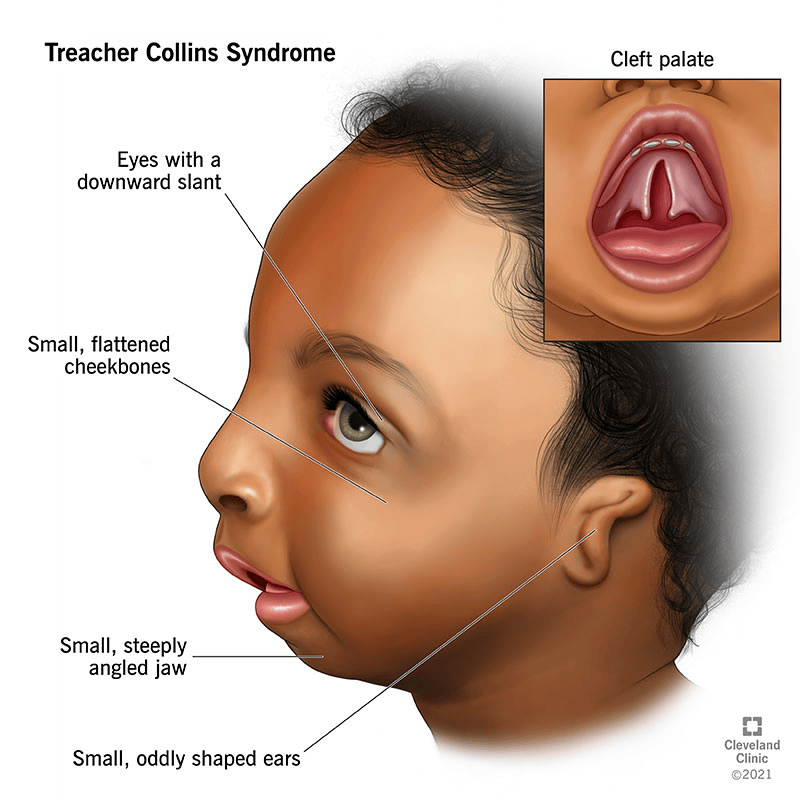
TCS is a rare genetic condition that causes different changes to the head and face, such as underdeveloped cheekbones, jaws, and ears, that can lead to breathing, eating, and hearing problems. Symptoms vary greatly from very mild to severe, and the condition is caused by changes in specific genes like TCOF1, POLR1B, POLR1C, or POLR1D.
Symptoms:
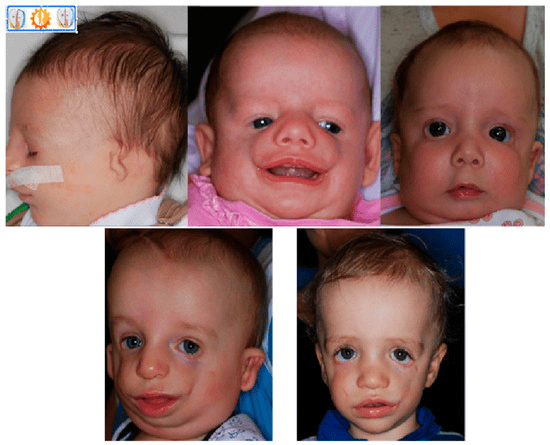
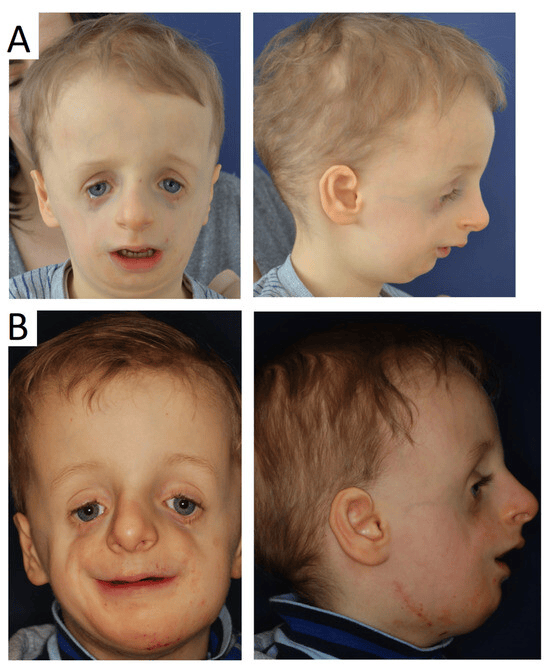
TCS is a congenital condition characterized by symmetrical, structural abnormalities of the facial bones, ears, eyes, and surrounding soft tissues. The severity and specific symptoms of TCS vary widely from person to person, even within the same family, ranging from mild cases that go undiagnosed to severe forms involving life-threatening complications. Primary physical features present at birth often include underdeveloped cheekbones and an abnormally small lower jaw, which can cause the face to appear flat or sunken.
These jaw and throat malformations, along with potential nasal obstructions, high-arched or cleft palates, and tongue displacement, frequently lead to severe feeding difficulties, obstructive sleep apnea, and potentially critical respiratory issues in early infancy. Malformations of the mouth and jaw also commonly result in various dental problems, such as misaligned, missing, or underdeveloped teeth.
Beyond facial structure, TCS significantly impacts the ears and eyes, but intelligence typically remains unaffected. Most individuals experience conductive hearing loss due to malformed or absent middle ear bones, accompanied by small, crumpled, or missing outer ears and blocked ear canals. Ocular abnormalities are also widespread, often giving the eyes a distinctive downward slant. Common eye features include notches in the lower eyelids, sparse eyelashes, crossed eyes, narrowed tear ducts, and chronic eye irritation or dry eye.
While speech, language, and psychomotor delays can occasionally arise, usually secondary to hearing loss, structural mouth differences, or rare neurological complications, most people with TCS have normal cognitive development. Infrequently, individuals may also present with scalp hair growth extending toward the cheeks, congenital heart defects, or gastrointestinal malformations.
Causes:
TCS is caused by genetic variants in the TCOF1, POLR1B, POLR1C, or POLR1D genes, which can be inherited in autosomal dominant or autosomal recessive patterns depending on the specific gene involved. Mutations in the TCOF1 gene account for approximately 80% of all cases. When TCS is autosomal dominant, a single mutated copy from either parent is sufficient to cause the condition, with each child of an affected parent having a 50% chance of inheriting it regardless of sex.
Roughly half of dominant cases arise spontaneously as de novo mutations without prior family history, though some parents may simply have symptoms so mild that they went undiagnosed. Conversely, autosomal recessive forms require a child to inherit a mutated copy from both parents. When both parents are asymptomatic carriers, each pregnancy carries a 25% risk of producing an affected child, a 50% chance of producing a carrier, and a 25% chance of passing on two normal genes.
At a cellular level, TCS is classified as a ribosomopathy, a disease caused by defects in ribosome biogenesis. The TCOF1 gene produces the treacle protein, an essential factor for RNA polymerase I, while POLR1B, POLR1C, and POLR1D encode structural subunits of RNA polymerases I and III. Together, these proteins are crucial for generating ribosomal RNA and assembling ribosomes, the cellular machinery responsible for protein synthesis.
Mutations in any of these genes lead to insufficient ribosomal RNA production, impairing embryonic neural crest cells that form most of the bone and cartilage of the face. Beyond ribosome assembly, recent research indicates treacle also helps protect neural cells from oxidative stress damage and regulates cell division. Because the severity of TCS varies widely even among family members, researchers suspect additional genetic and environmental factors influence how the condition manifests.
Diagnosis:
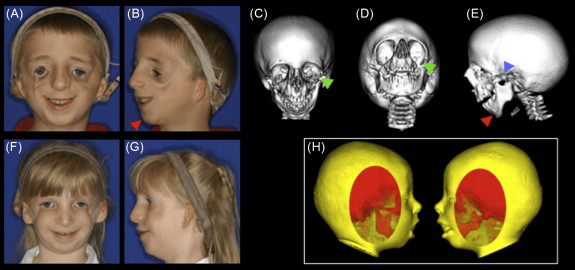
A diagnosis of TCS relies primarily on a detailed personal and family history, a thorough clinical evaluation, and the identification of characteristic physical features present at birth, such as outer ear malformations. Specialized craniofacial X-ray imaging is often used during the diagnostic workup to confirm the presence and extent of structural differences. These imaging studies can reveal subtle anomalies, such as an underdeveloped lower jawbone, micrognathia, or internal ear defects, which are particularly helpful in mild cases where outward signs are faint or obscured.
Because TCS shares physical characteristics with other craniofacial conditions, evaluating close relatives, like parents and siblings, is crucial, as milder manifestations in family members frequently go unnoticed.
To establish a definitive diagnosis, researchers strongly recommend molecular genetic testing. Laboratory tests can identify causative variants in the TCOF1, POLR1B, POLR1C, and POLR1D genes, with TCOF1 mutations accounting for roughly 80% of identified cases. When a specific gene variant has already been detected in an affected family member, prenatal screening becomes an option. During pregnancy, fetal ultrasonography may detect suggestive facial features, while procedures like amniocentesis and chorionic villus sampling can provide early genetic confirmation before birth.
Treatment:
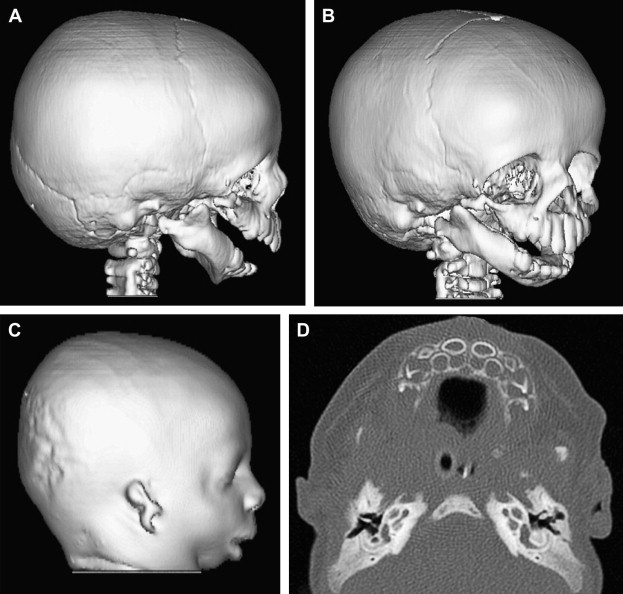
While there is no cure for TCS, individual symptoms can be managed through a coordinated, multidisciplinary medical team. A comprehensive care group, including pediatric specialists, plastic surgeons, audiologists, ophthalmologists, speech pathologists, and geneticists, works together to monitor and treat physical abnormalities. Early intervention is essential; infants require immediate and annual hearing evaluations to support normal speech development, while ophthalmologists use specialized equipment to check for visual impairments.
Medical teams also closely track jaw and dental development, providing services like speech therapy and social support to help children reach their full potential. Genetic counseling is also recommended for affected individuals and their families.
Surgical intervention is often needed to correct craniofacial malformations, though timing and procedures depend on the severity of the condition and overall health. Cleft palate repair is typically performed around ages 1 to 2, facial and orbital reconstructions around ages 5 to 7, and ear reconstructions around age 6. Jawbone adjustments can occur anytime from infancy to adolescence.
Because airway obstruction can be a subtle yet life-threatening issue, patients may undergo sleep studies to guide treatment; severe cases may necessitate a tracheostomy to maintain breathing, jaw-lengthening procedures, or a gastrostomy tube to ensure proper infant nutrition. While multiple surgeries are common, outcomes vary and may not be fully corrective.
Non-surgical and supportive therapies play a major role in long-term management. Hearing loss is often addressed using bone-anchored hearing aids that bypass malformed ear canals by transmitting sound through bone, though middle and outer ear surgeries remain an option.
Vision problems are managed with corrective lenses, surgery, or supportive devices, while dental issues may require braces, implants, or corrective procedures. Finally, because TCS-related structural airway issues present unique challenges for anesthesia, thorough preoperative assessments and detailed medical histories are critical before any surgical procedure.
References:
Lee, J., Trainor, P., Sanchez-Lara, P. A., Dixon, M., & Wang Jabs, E. (2023, November 1). Treacher Collins Syndrome | TCS Disease | Symptoms & Treatment. NORD. NORD (National Organization for Rare Disorders). https://rarediseases.org/rare-diseases/treacher-collins-syndrome/


Leave a comment